Master's Research

Designing for sensory joy, regulation, and stimulation in public spaces
My Master’s research investigates how design can support sensory regulation, stimulation, and joy in everyday environments, particularly for neurodivergent individuals. I’m taking a neuroaffirmative approach, recently diagnosed with Autism Spectrum Disorder (ASD), I’m operating with the understanding that sensory difference is treated as a lived condition that design can actively engage with, not a problem to be corrected or minimized.
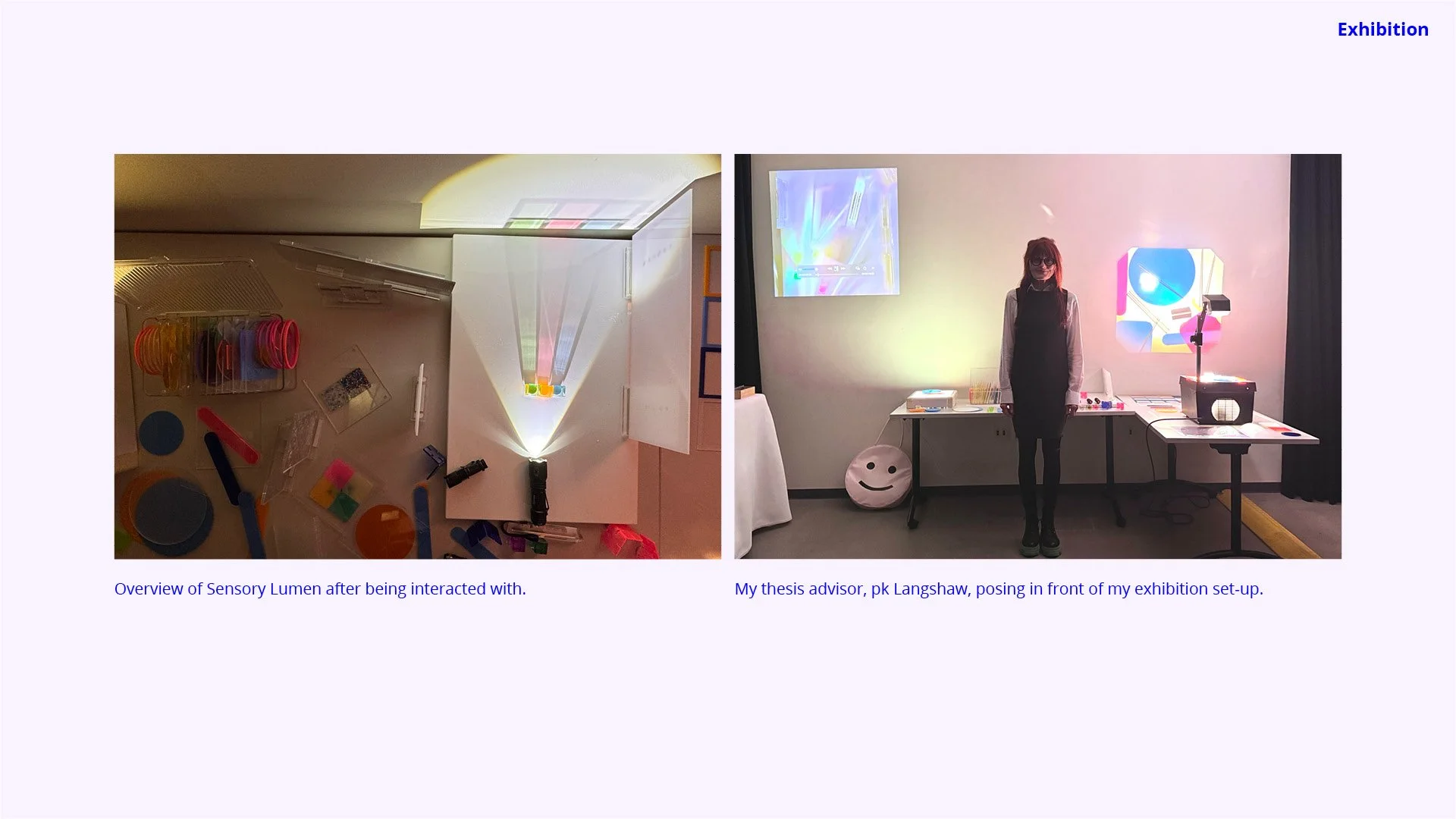
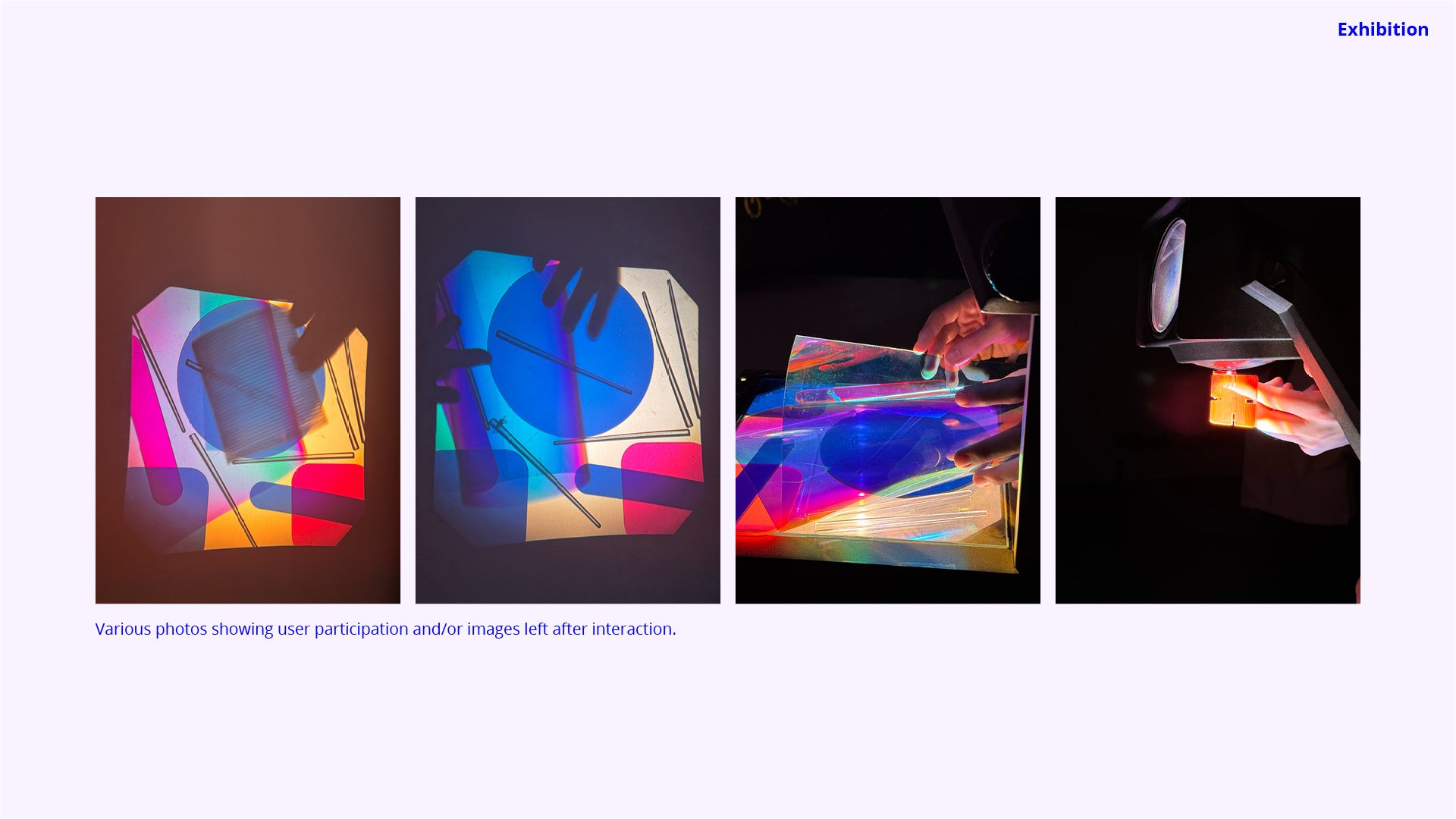
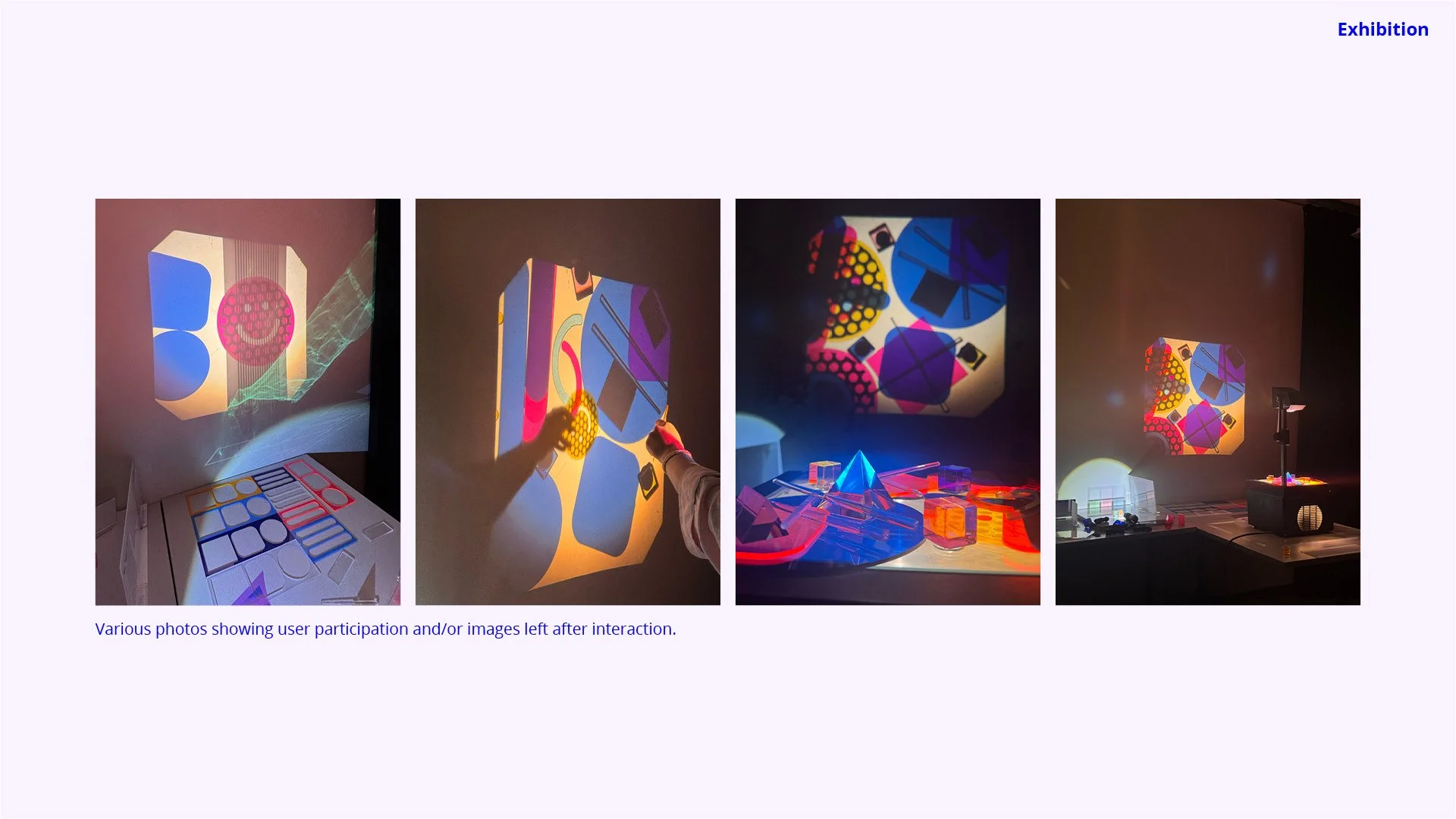
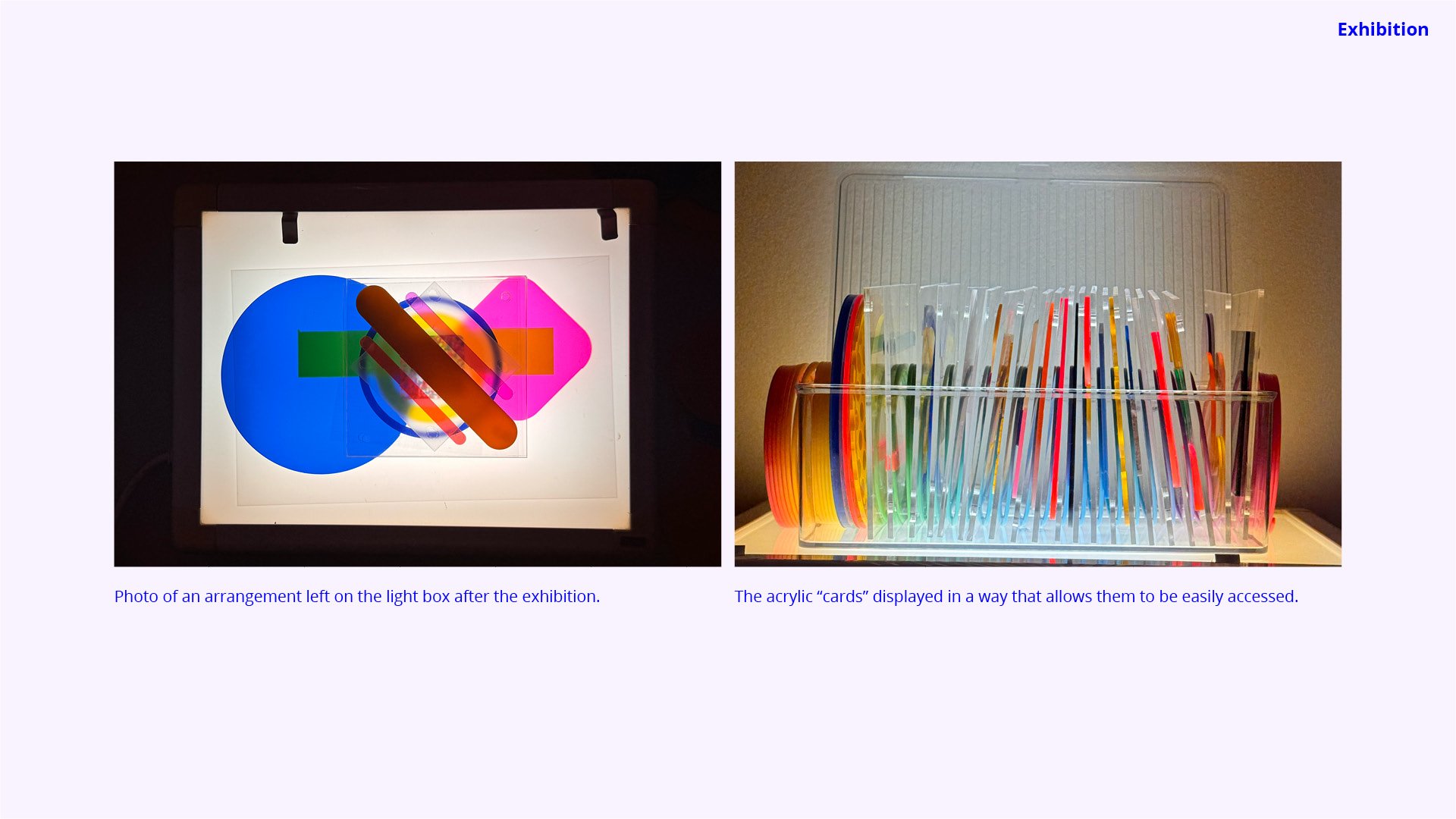
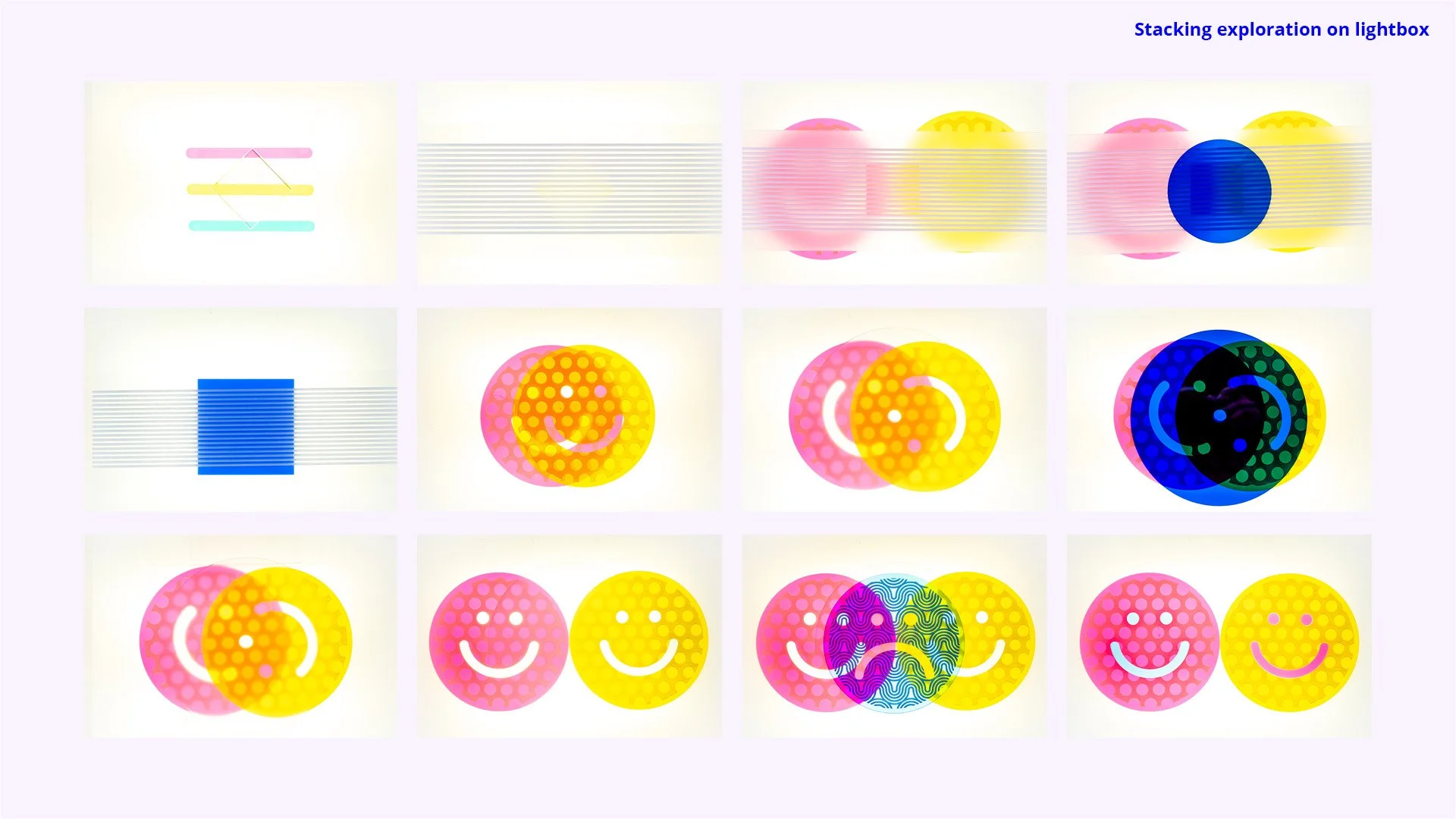
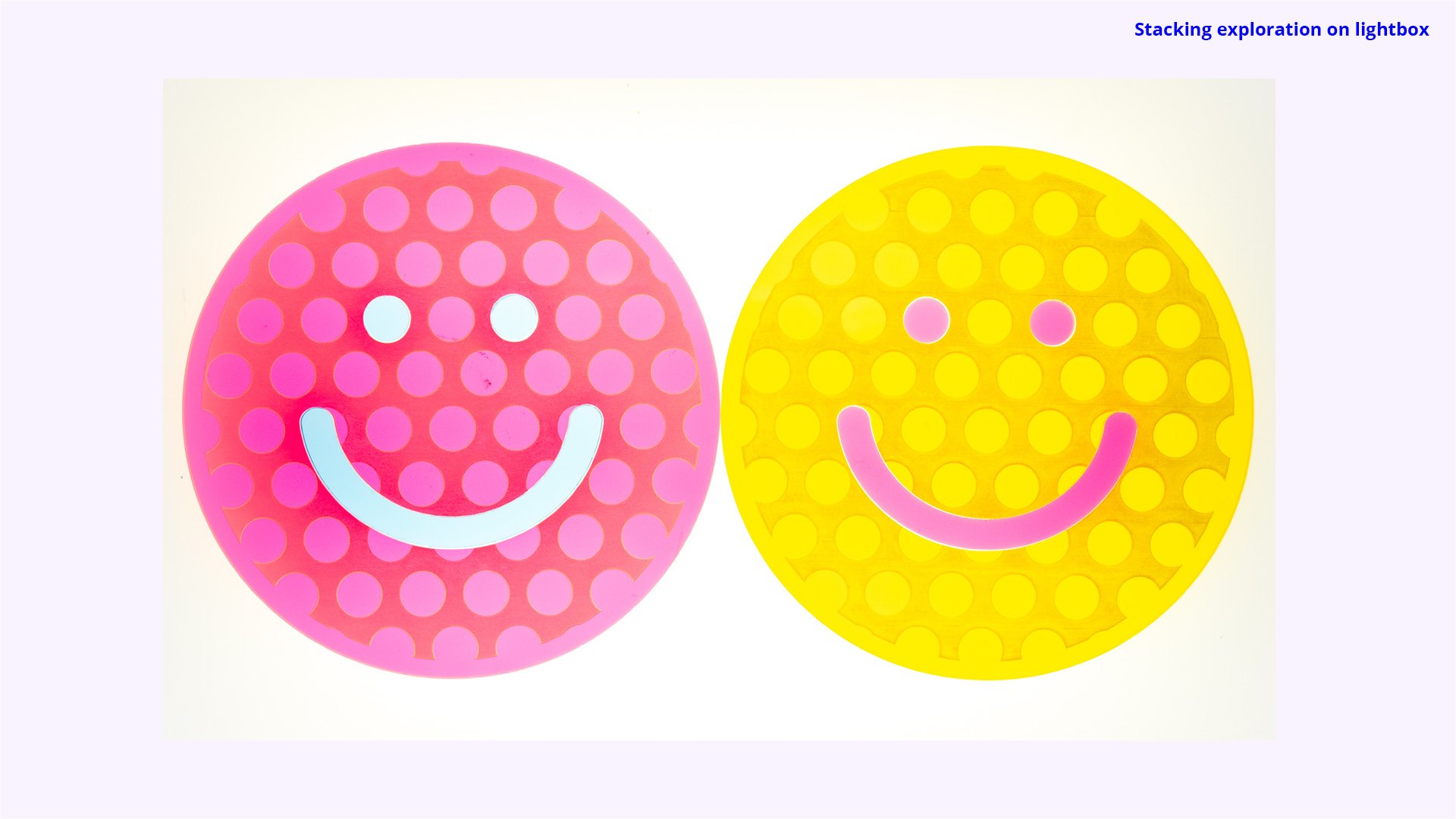
This project reframes sensory difference as a design condition that should inform how objects behave, feel, and invite interaction. The focus is on predictable, engaging, and self-directed sensory experiences rather than sensory avoidance, with an emphasis on colour.
The objects are not medical devices, toys, or fixed-use tools. Users assign their own meaning and patterns of use, with an emphasis on agency rather than compliance. They externalize aspects of sensory regulation, reducing internal sensory effort, suggesting that regulation can be designed into everyday objects and spaces, not just limited to clinical contexts.
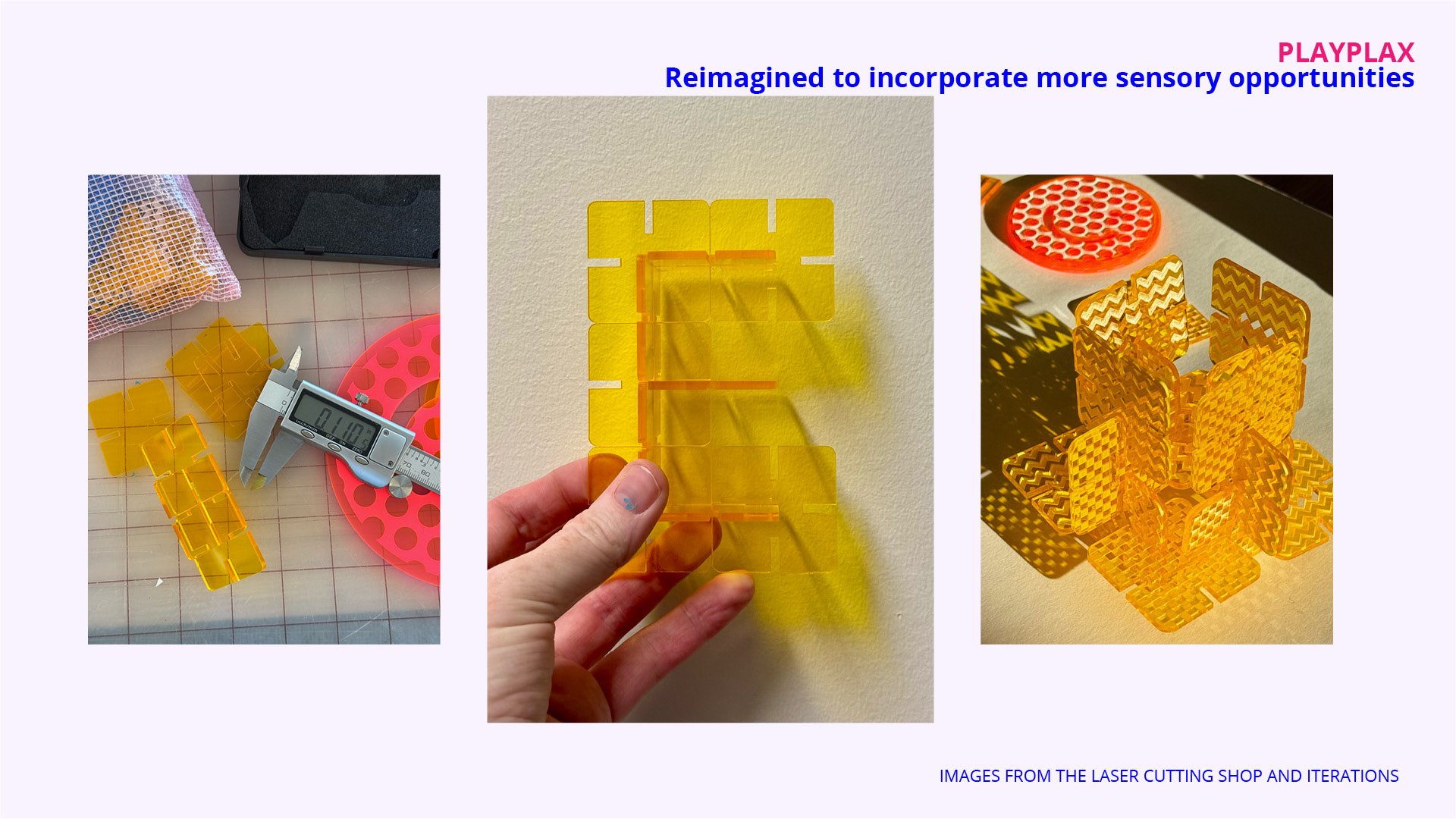
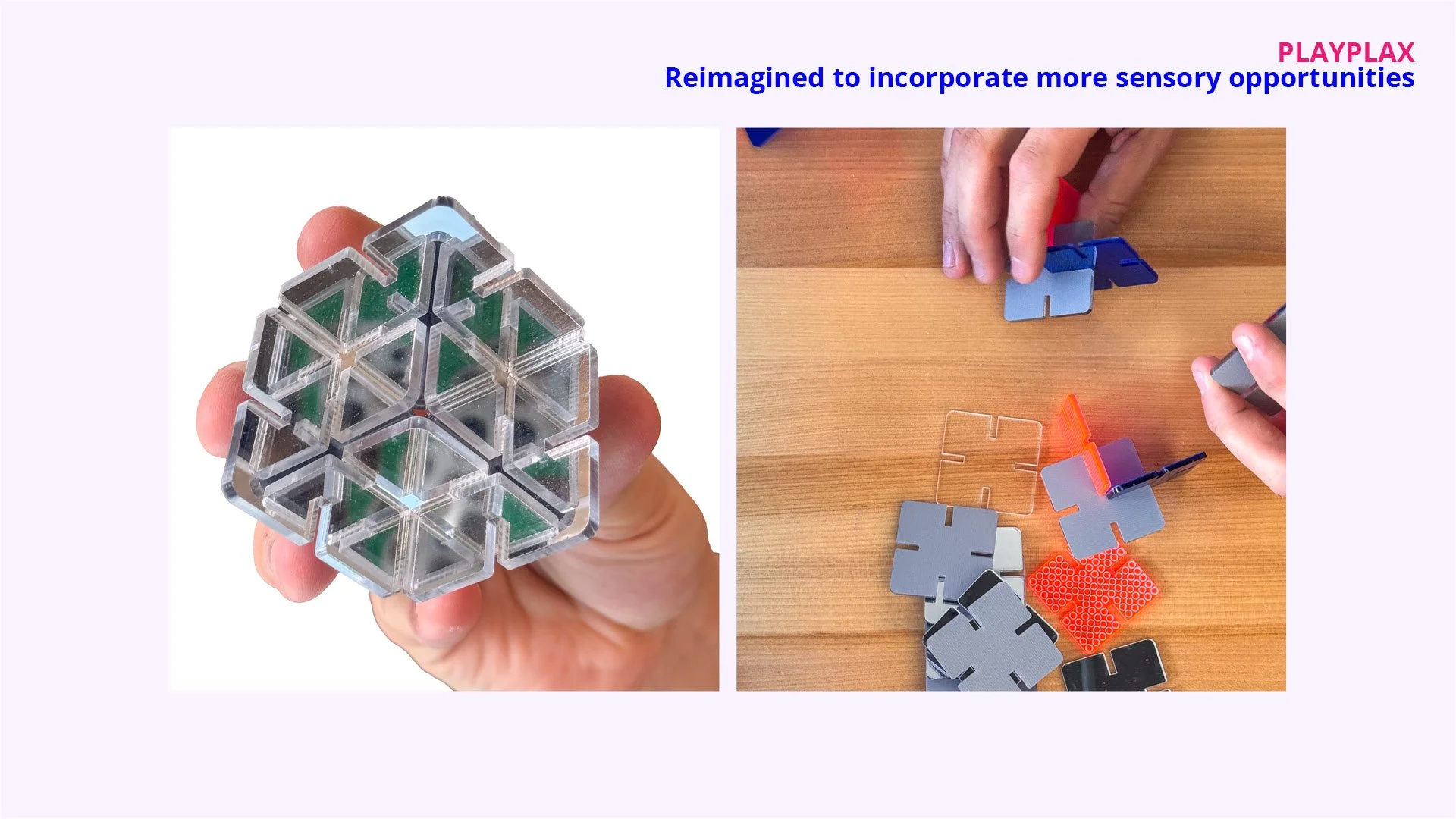
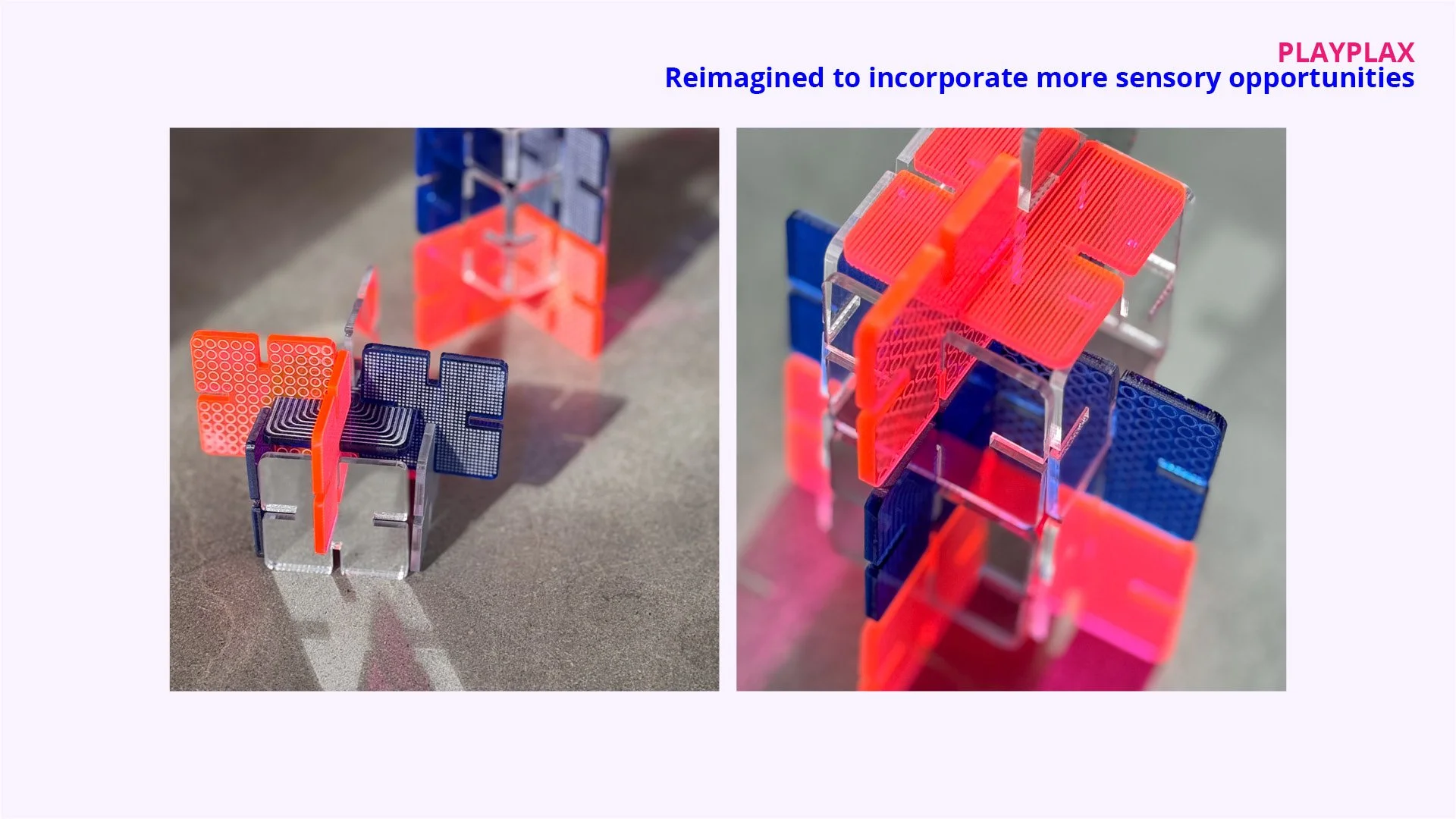
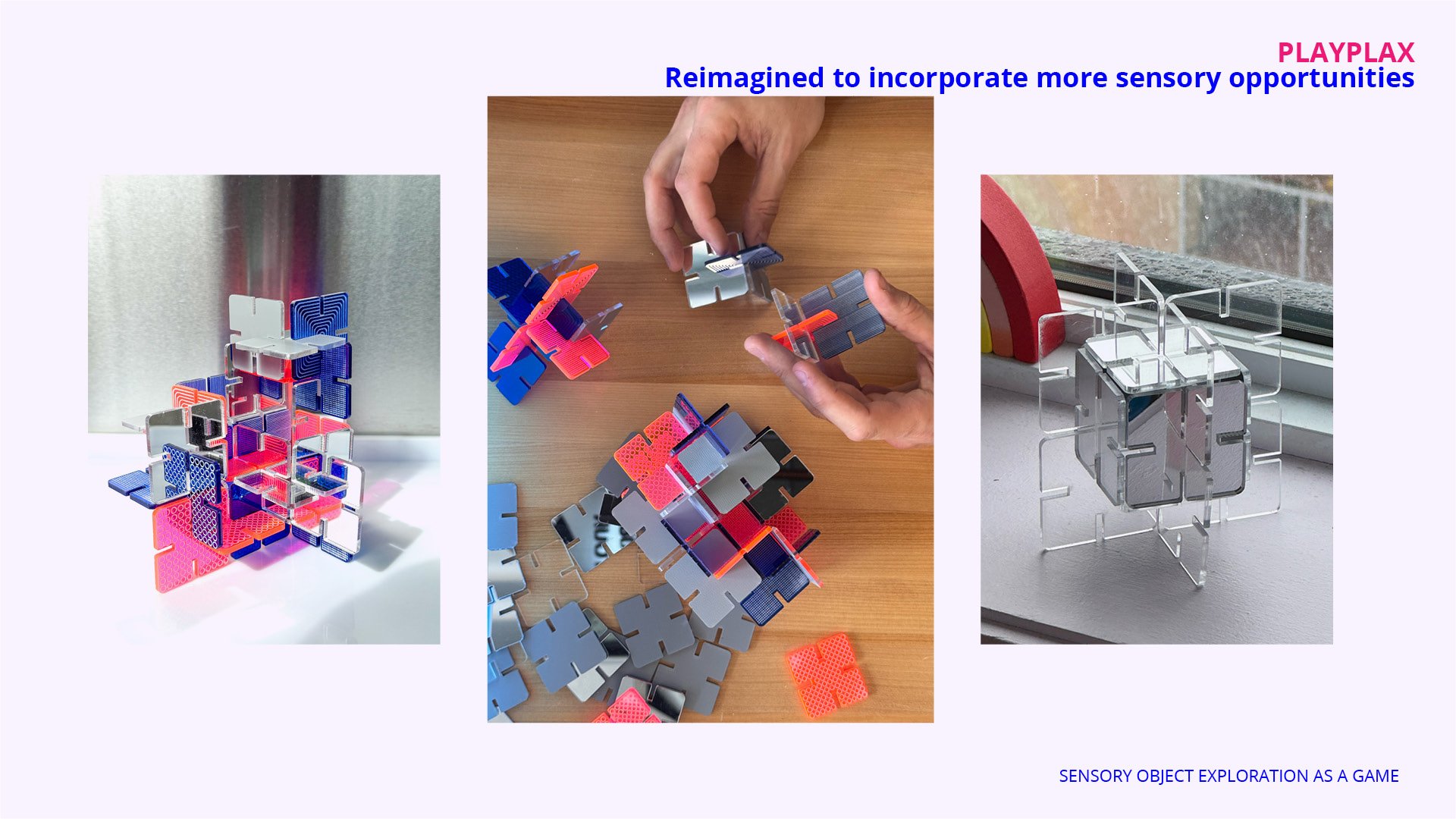
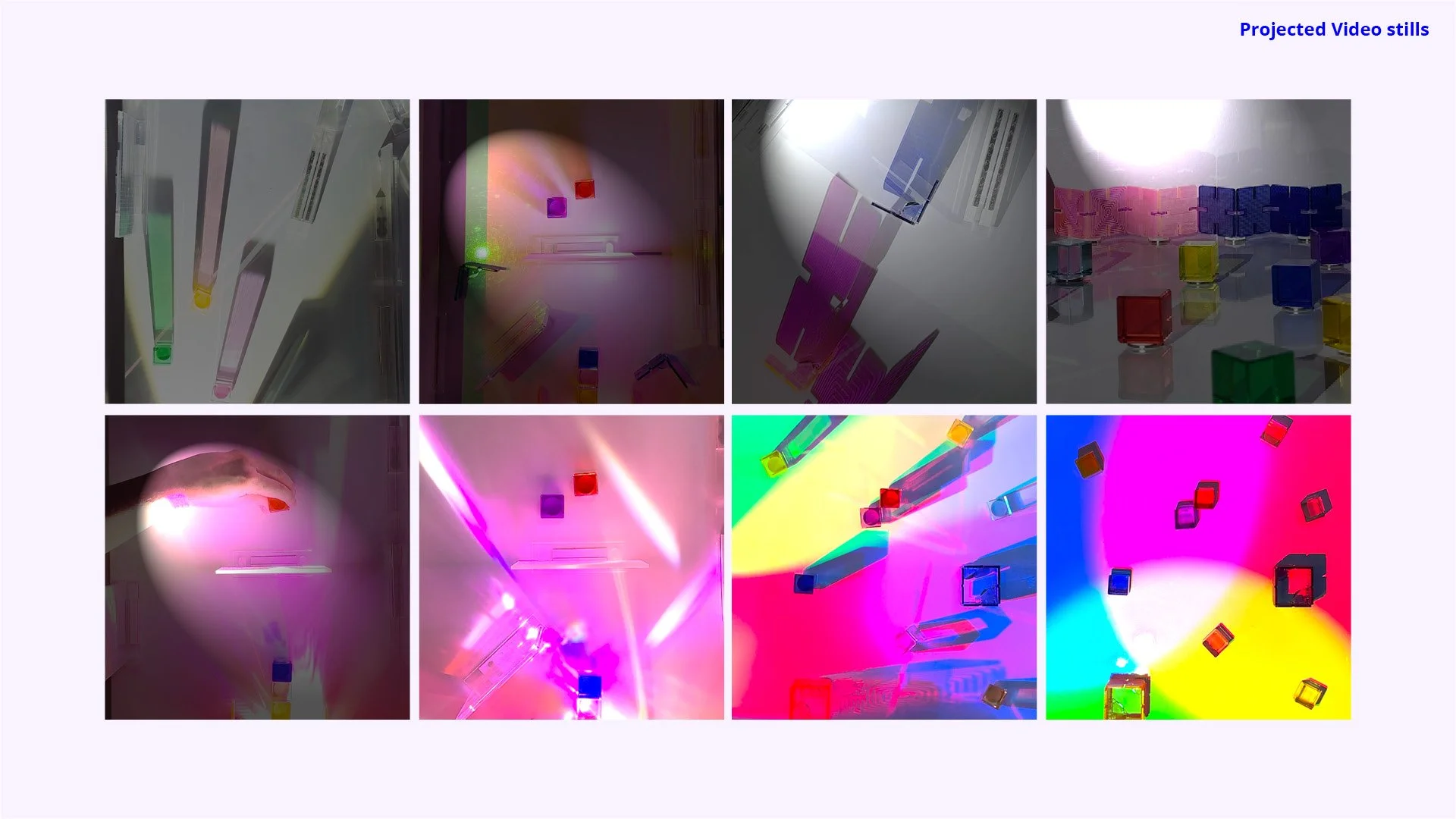
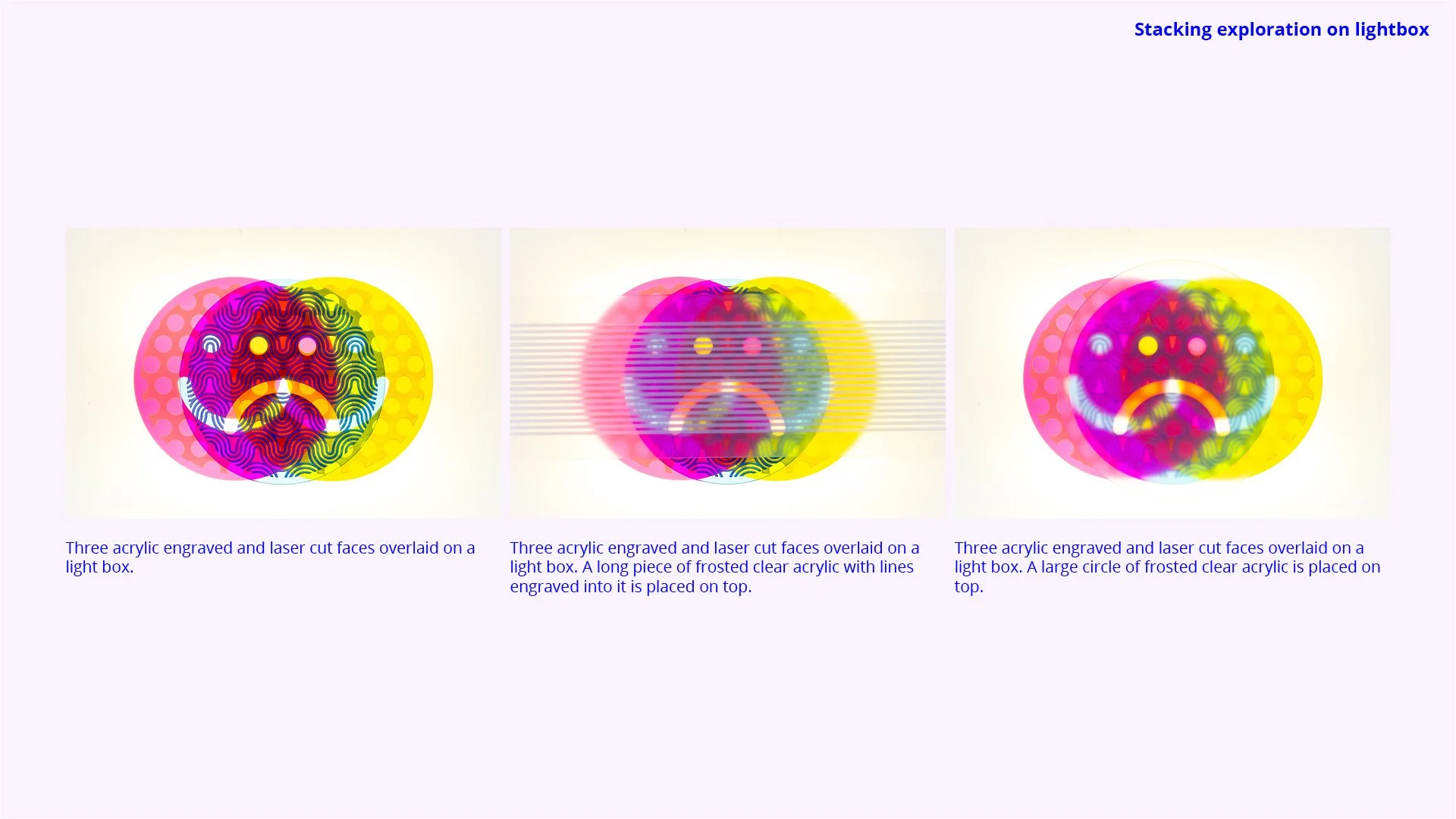
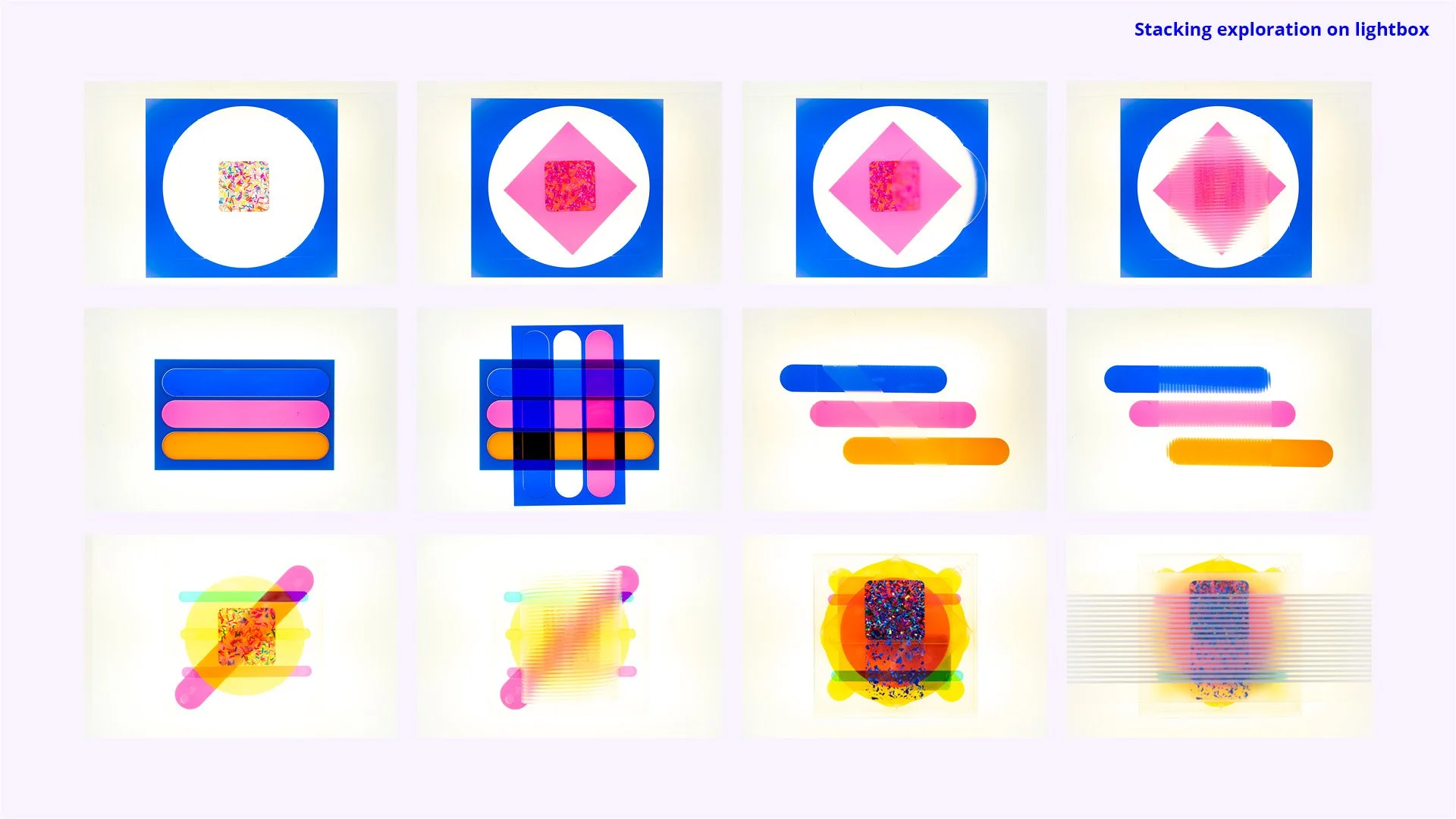
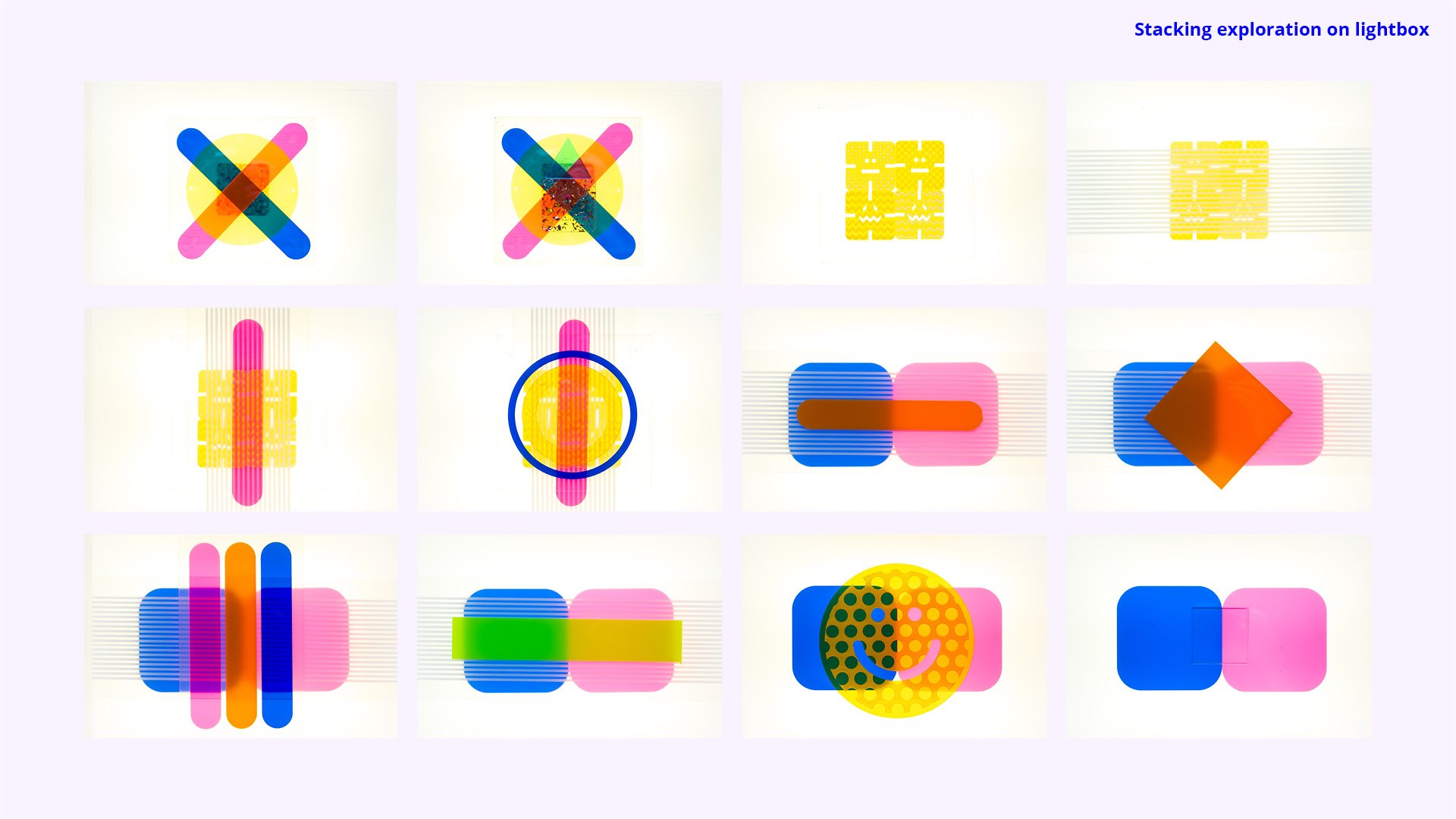
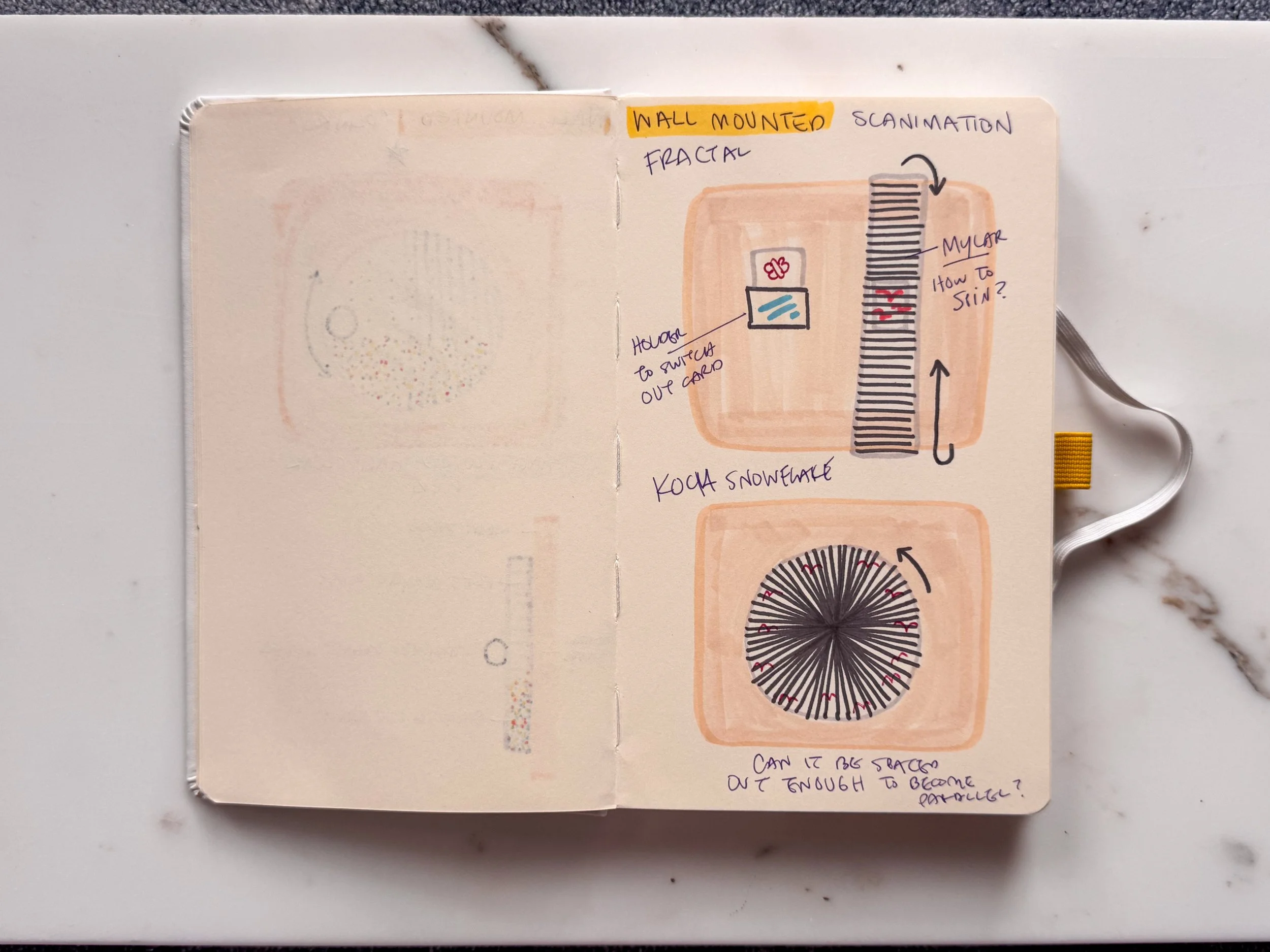
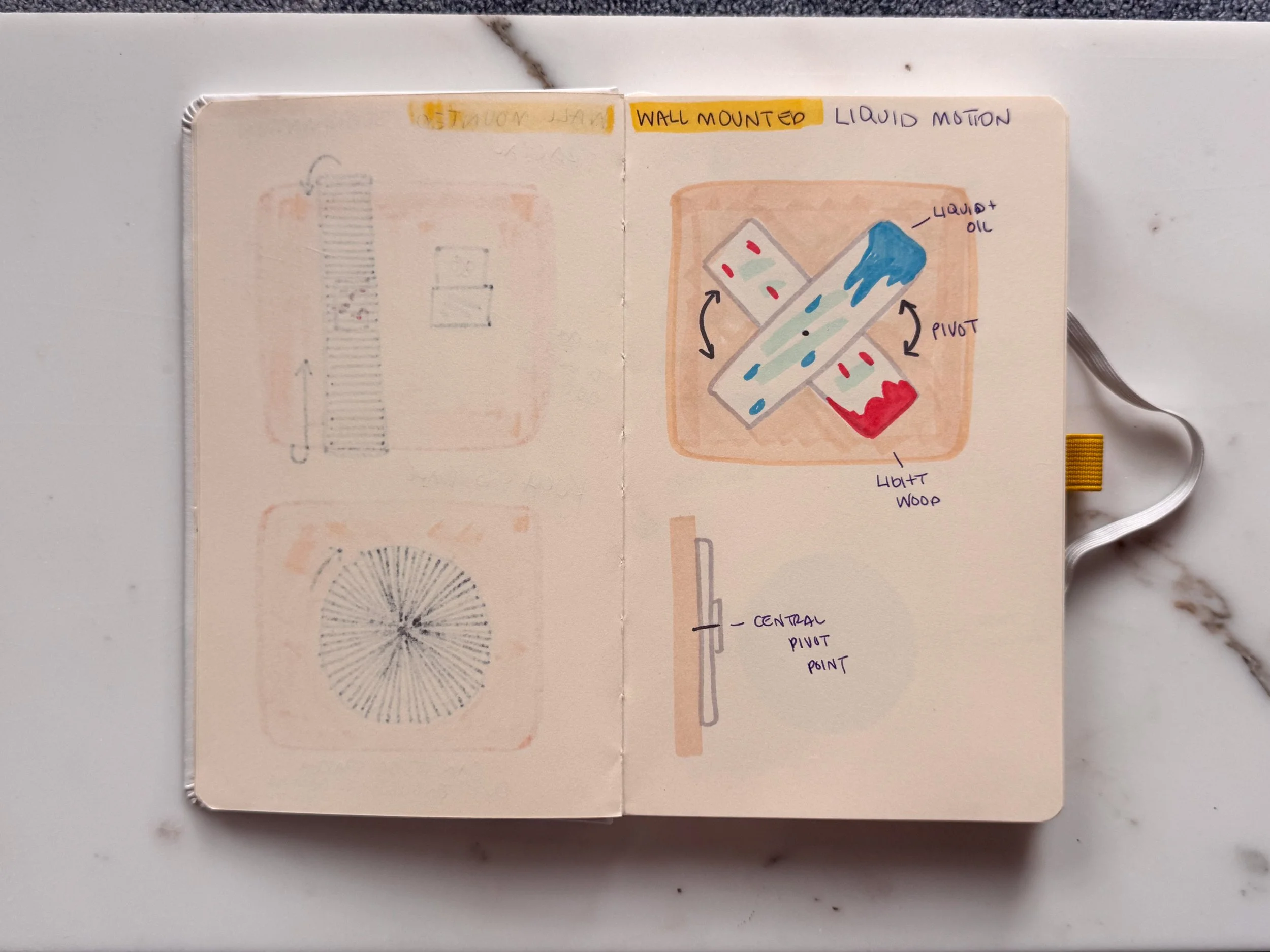
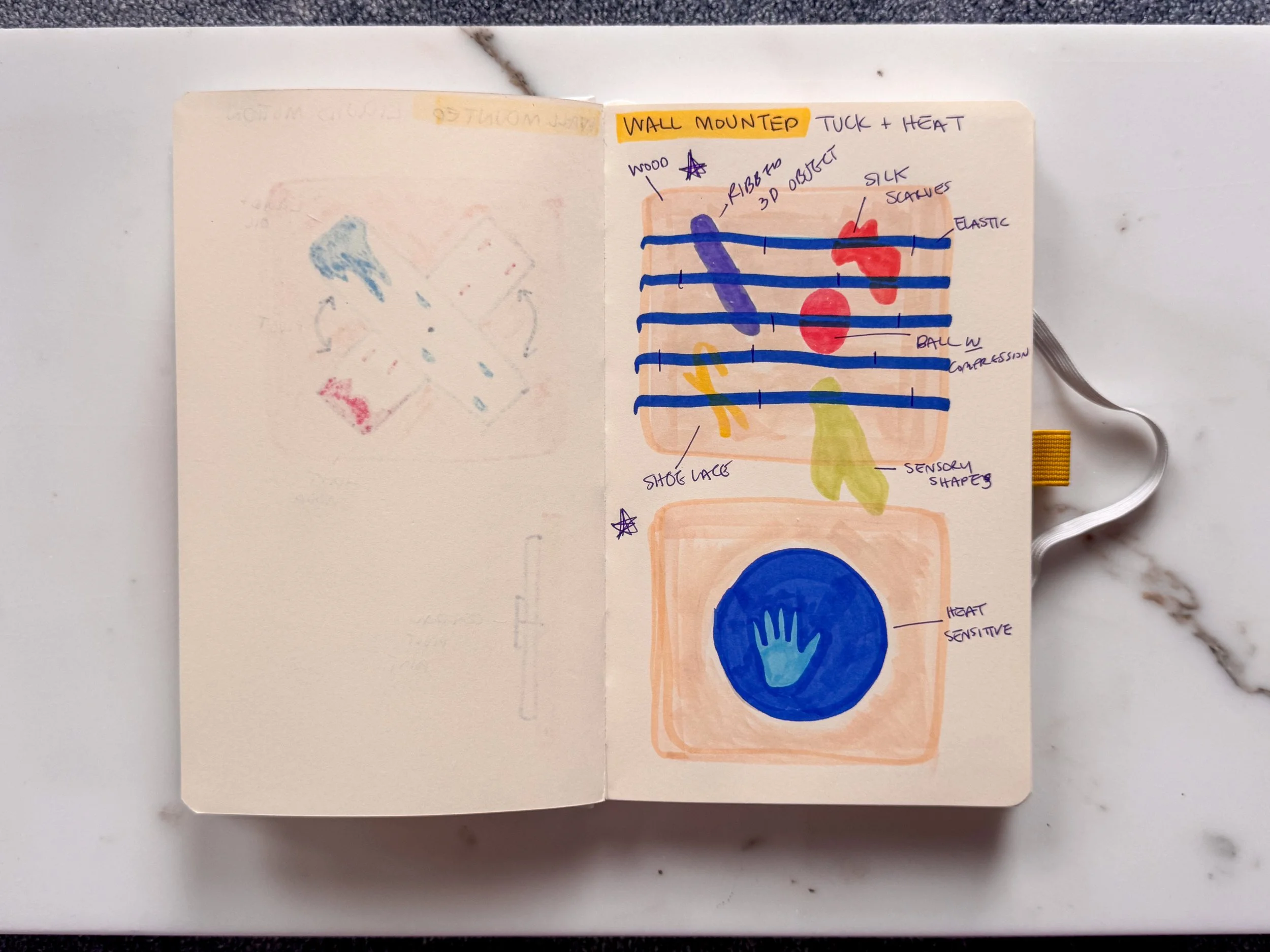
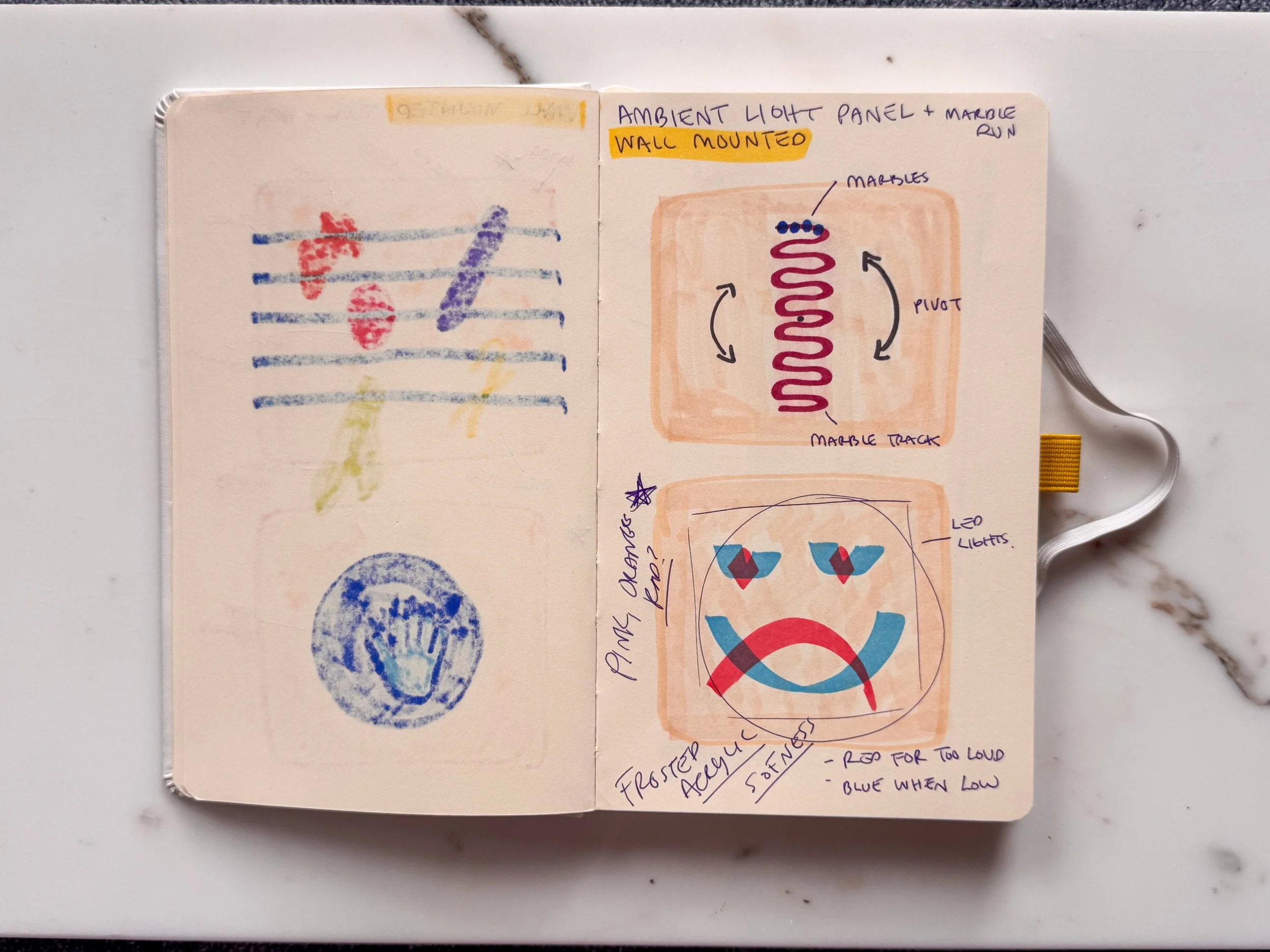
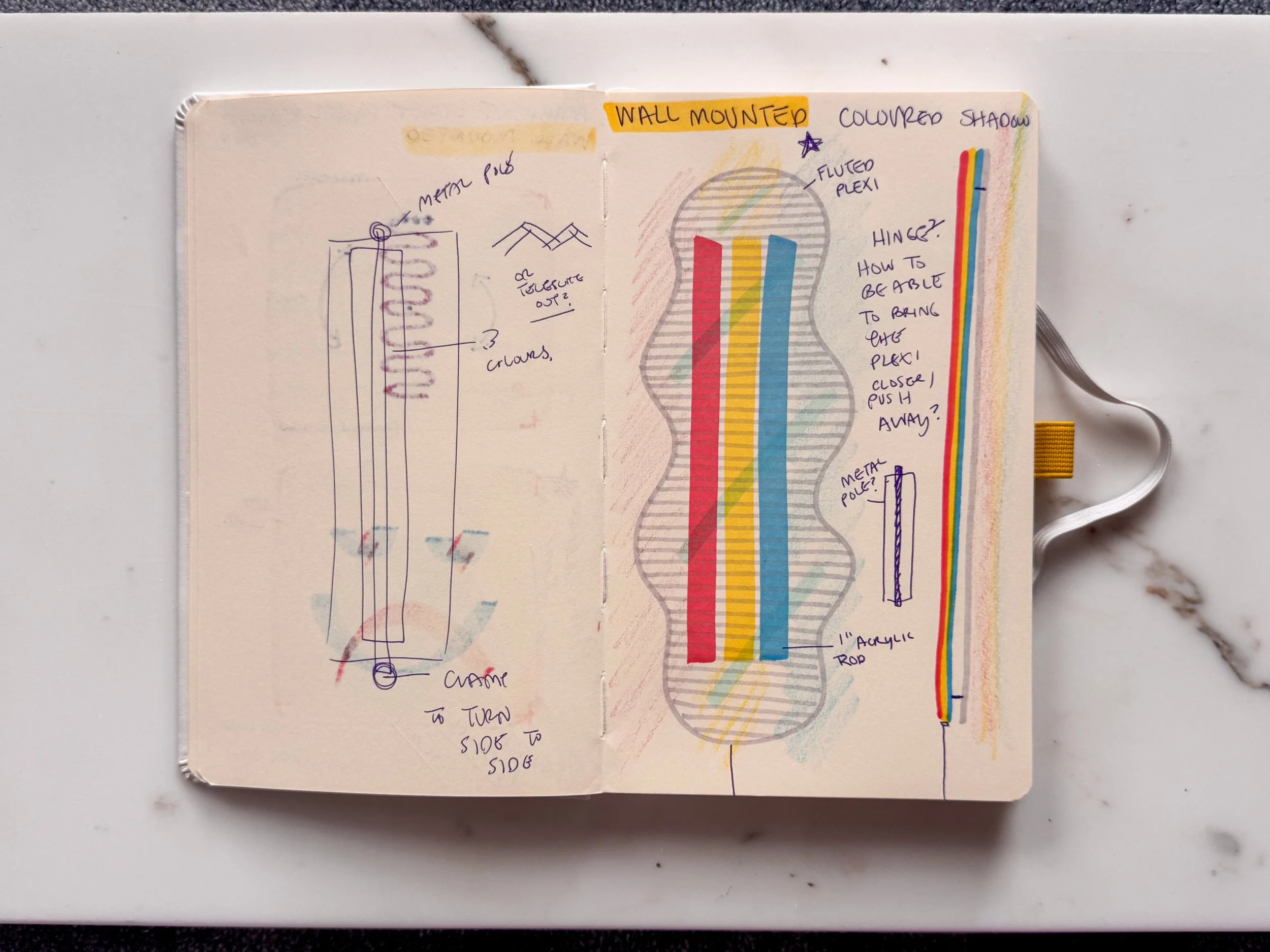
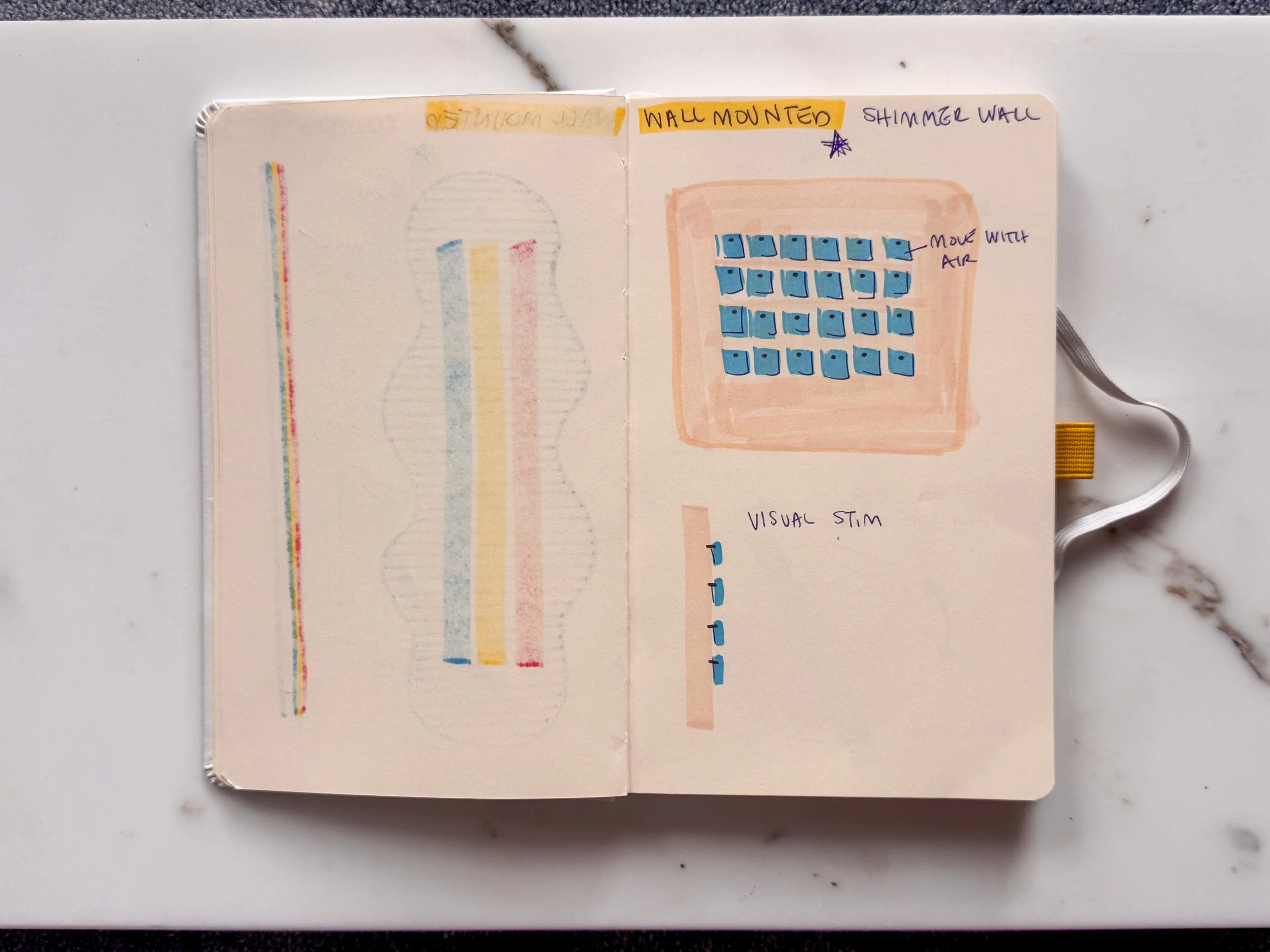
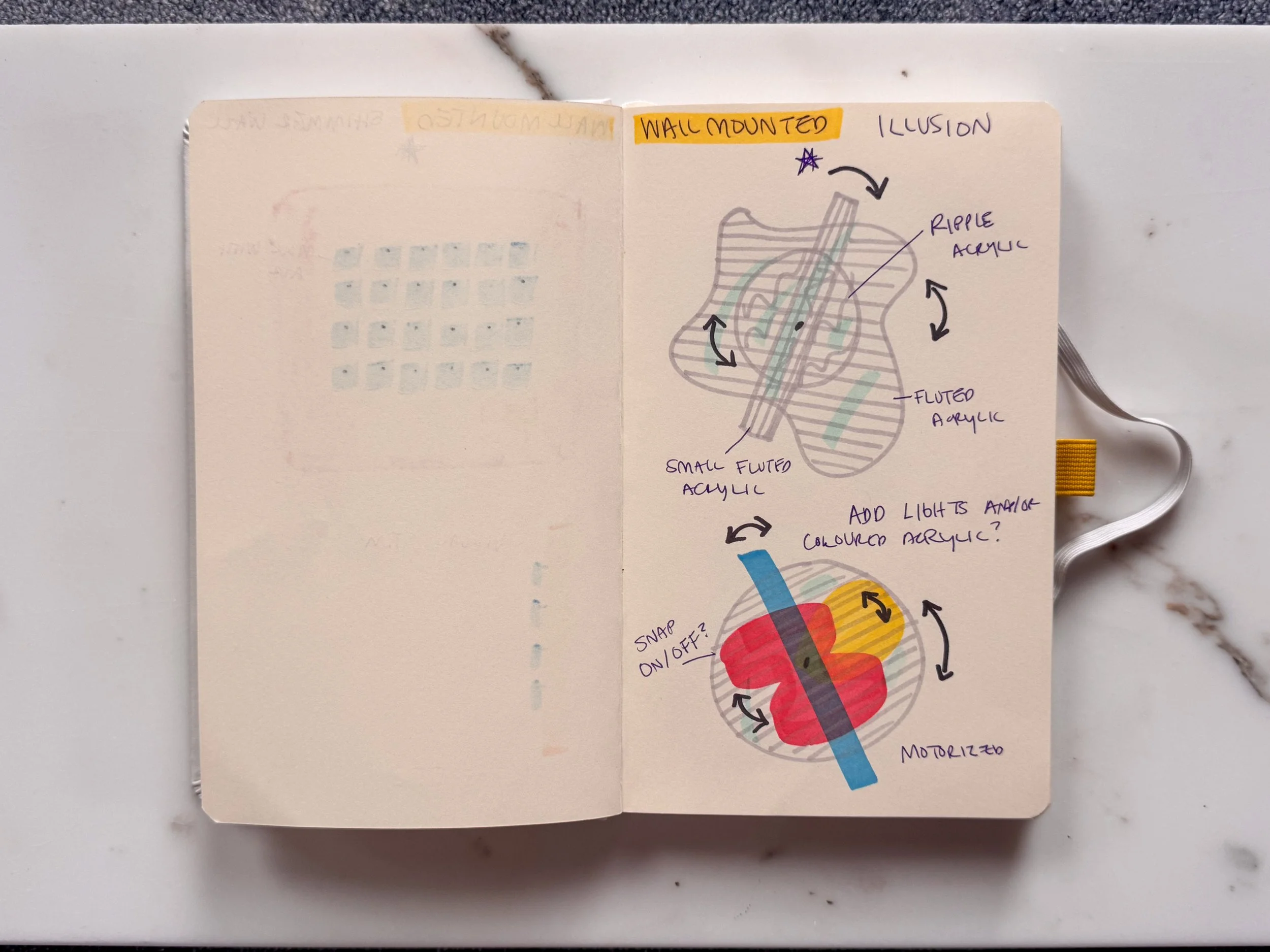
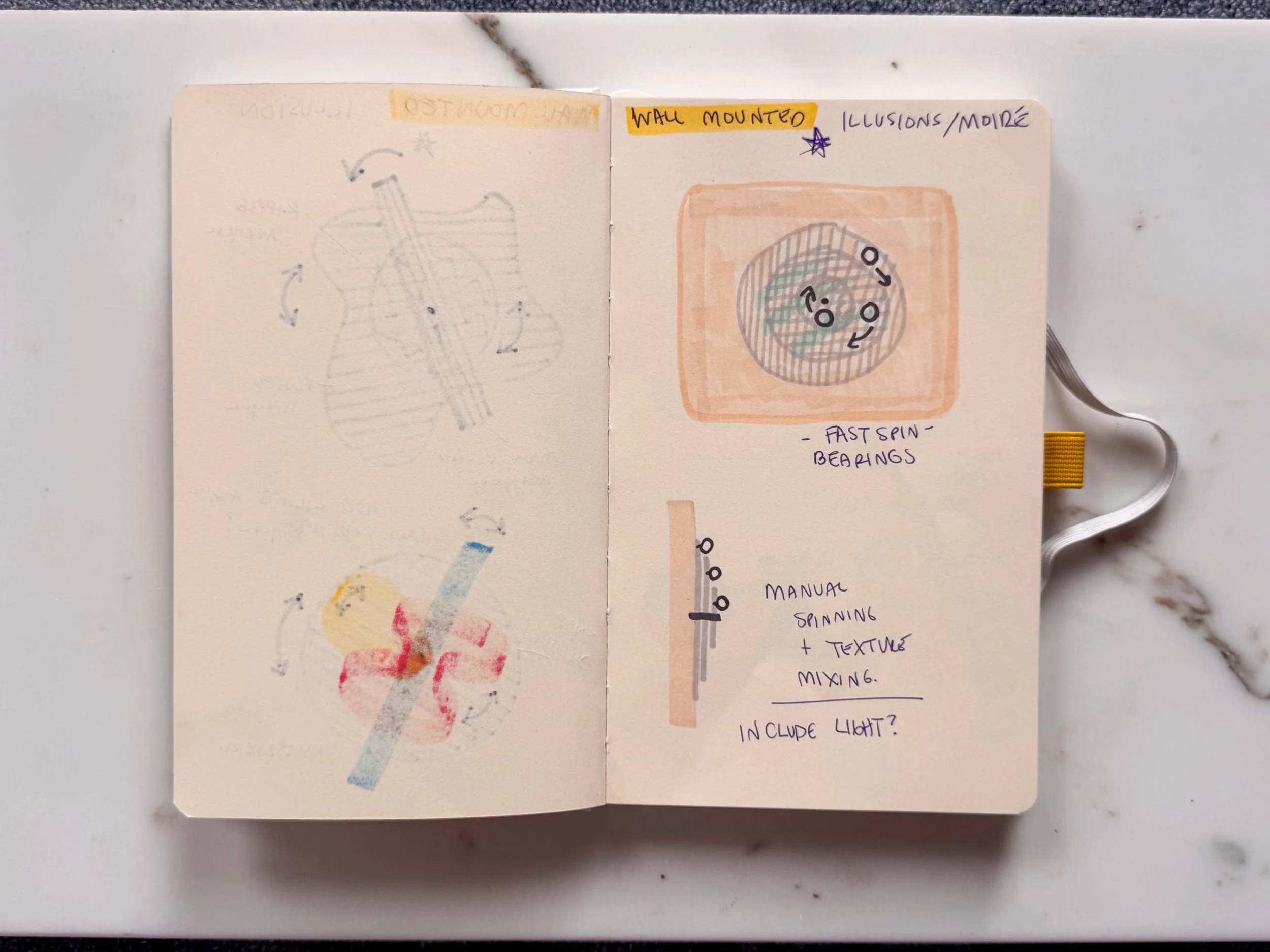
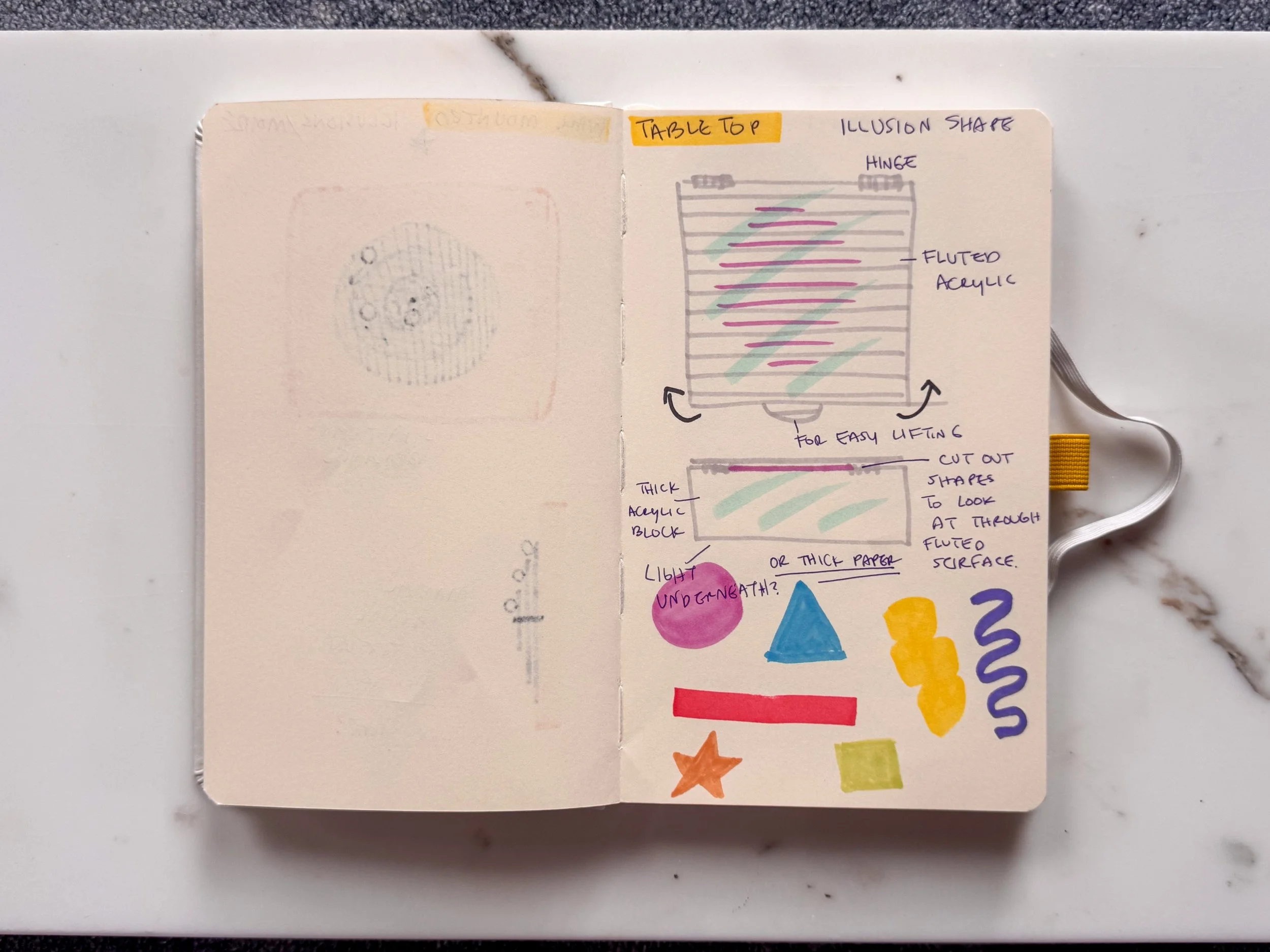
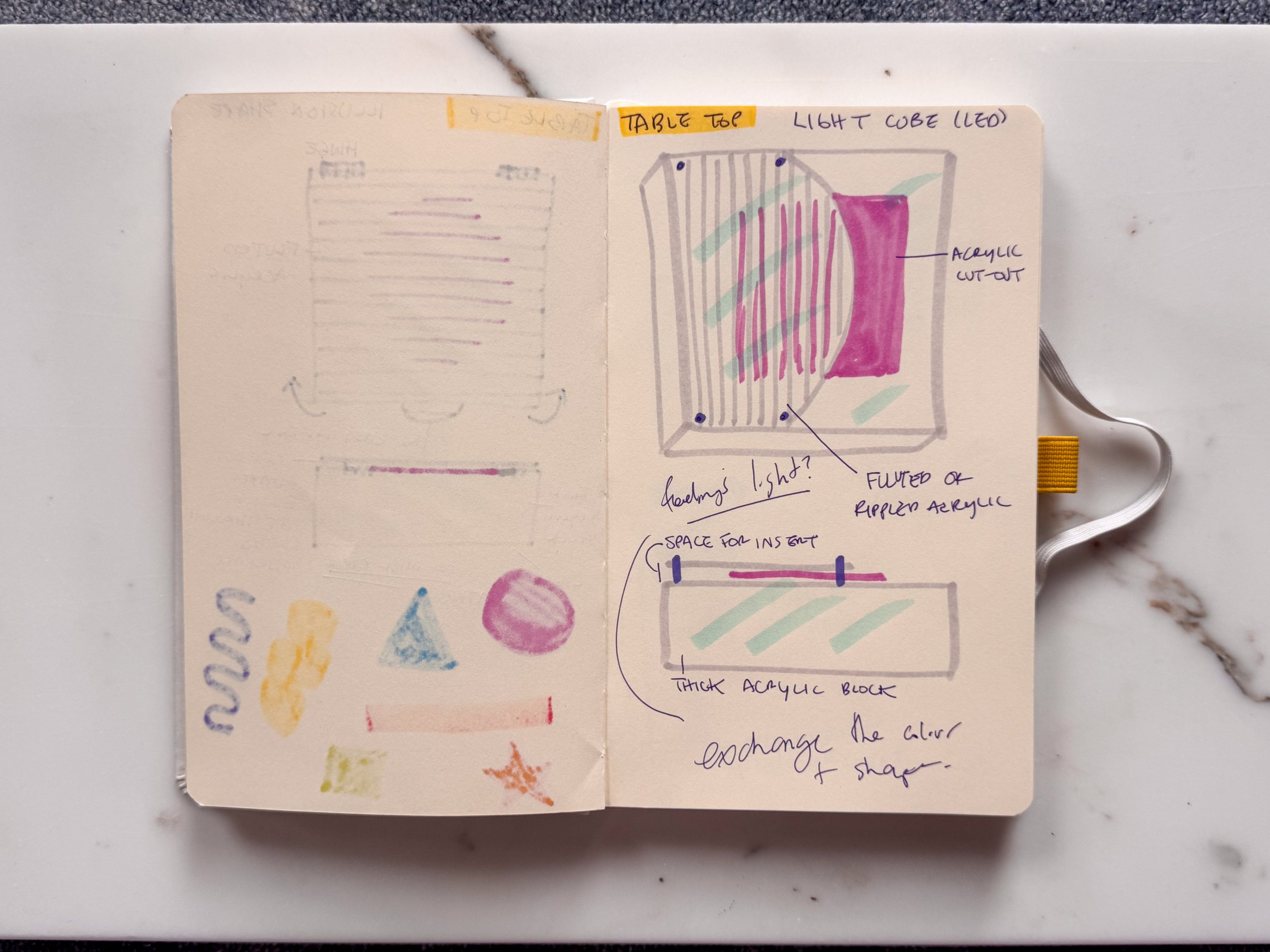
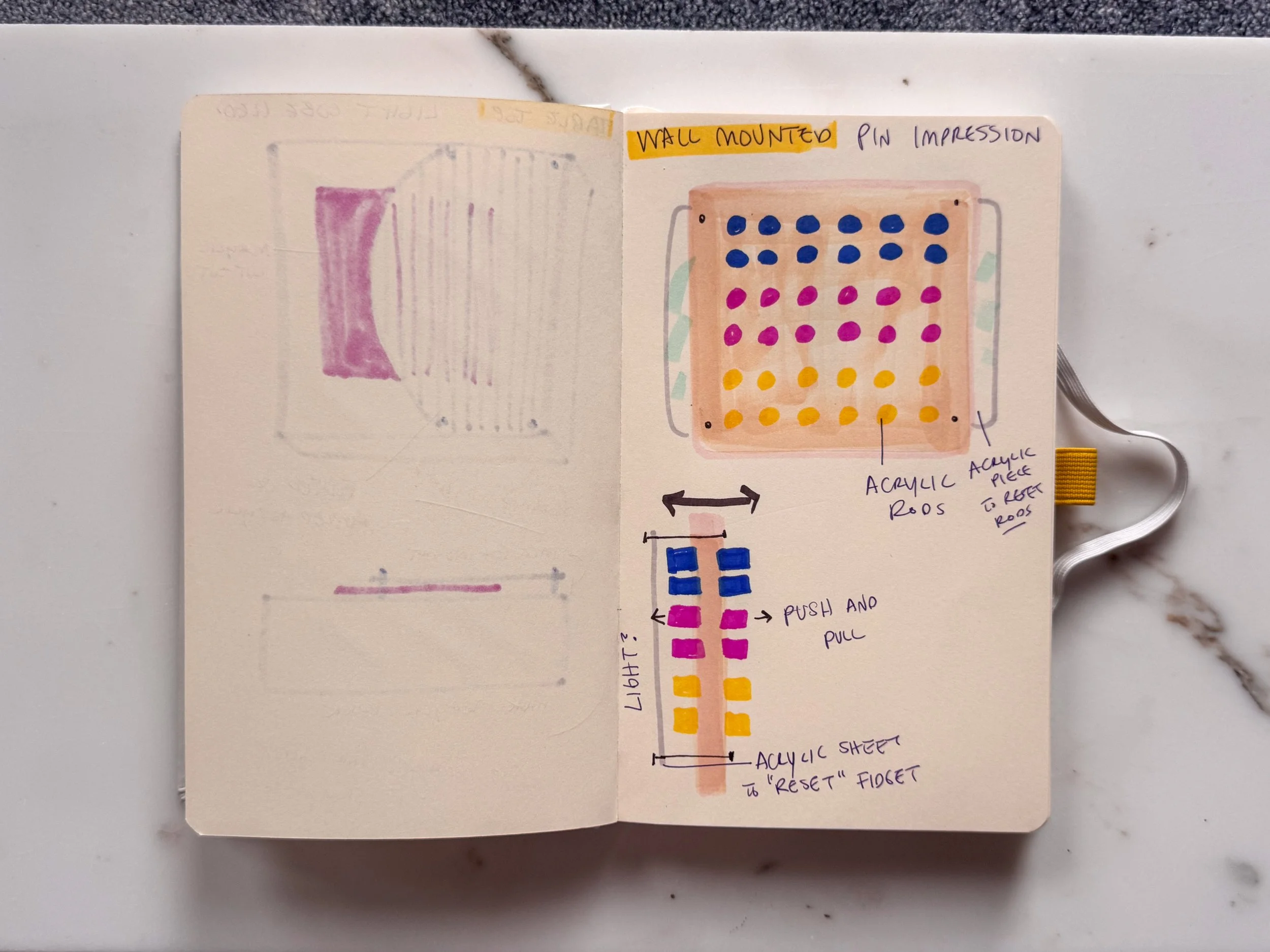
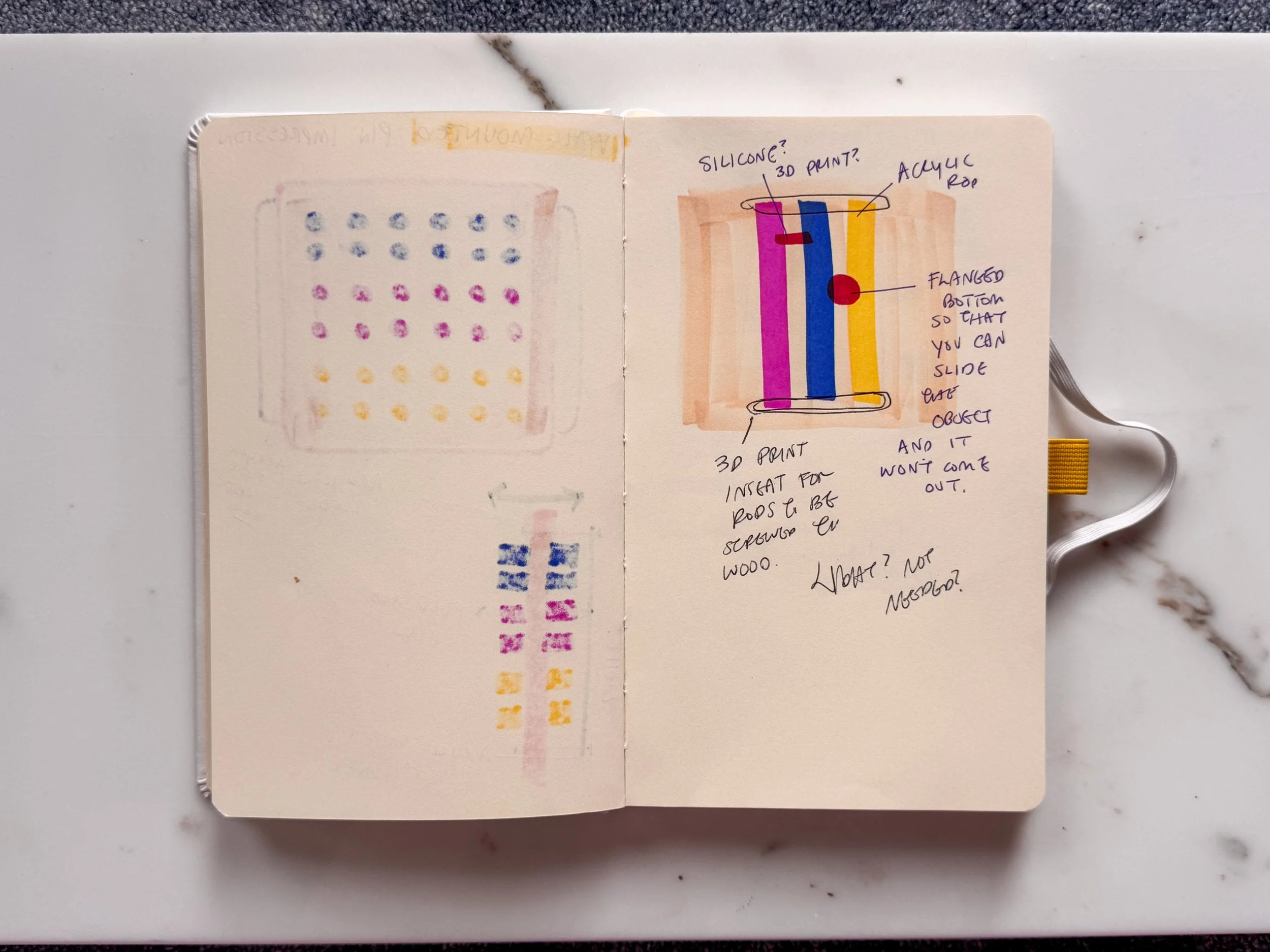
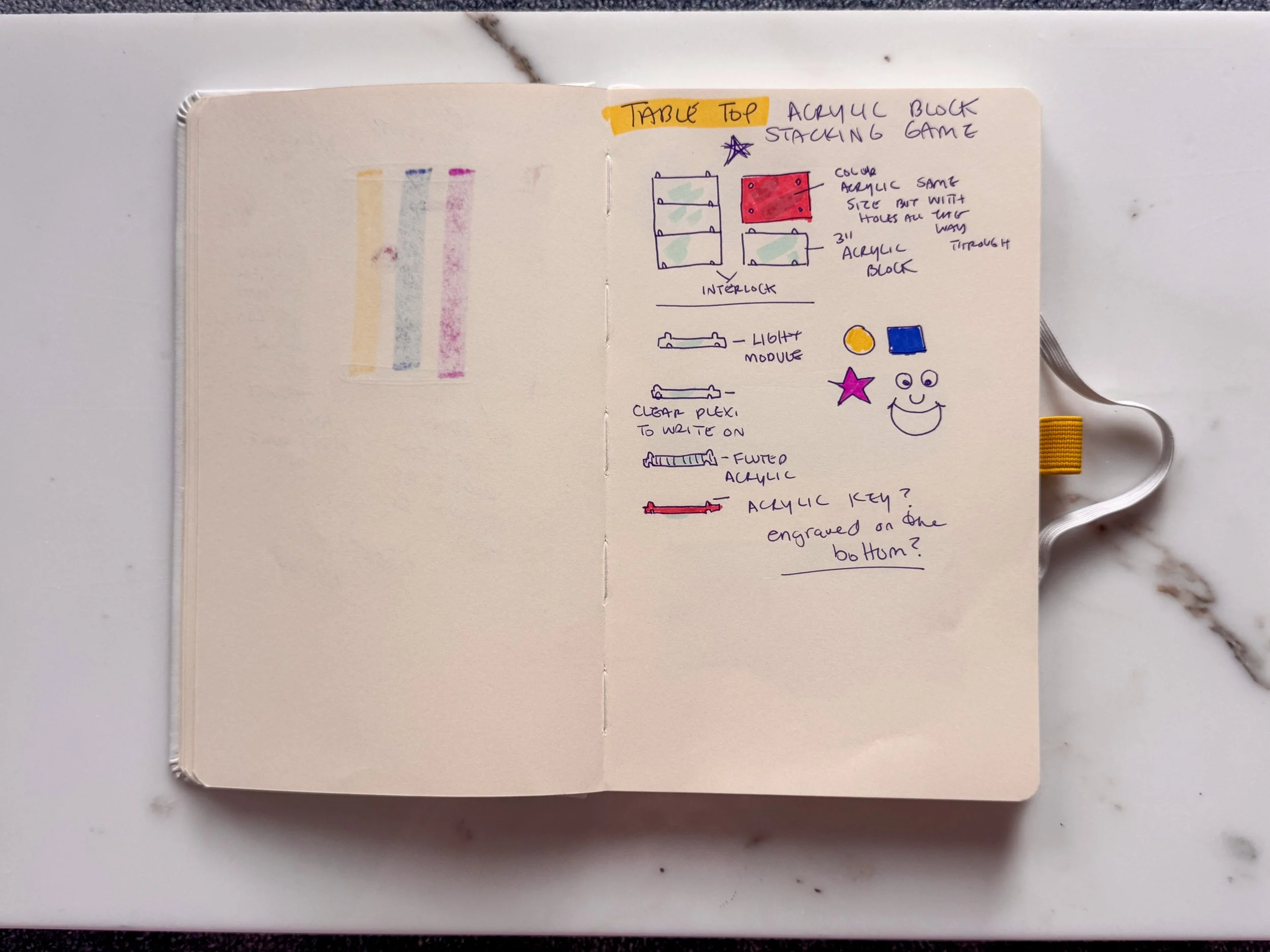
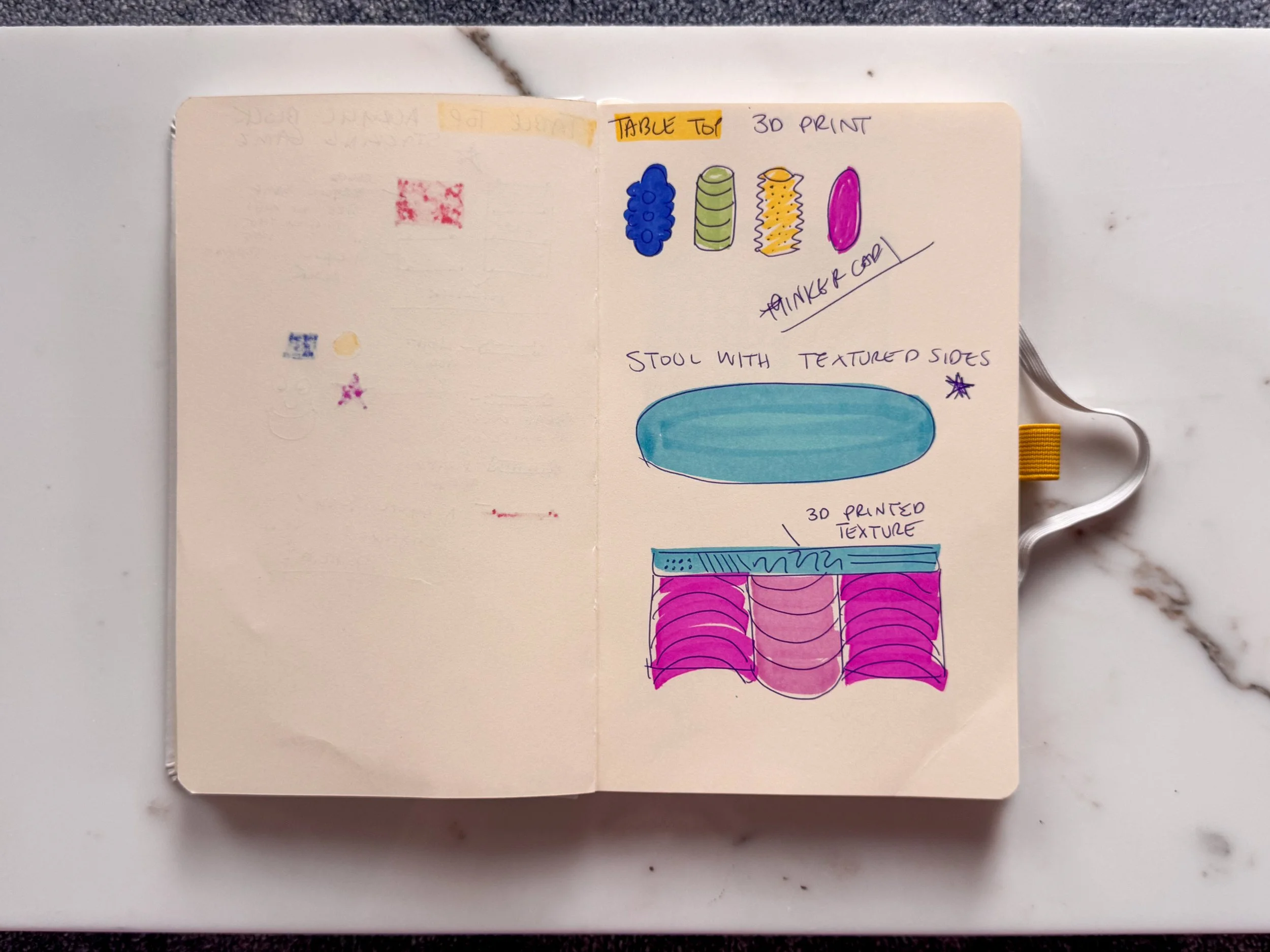
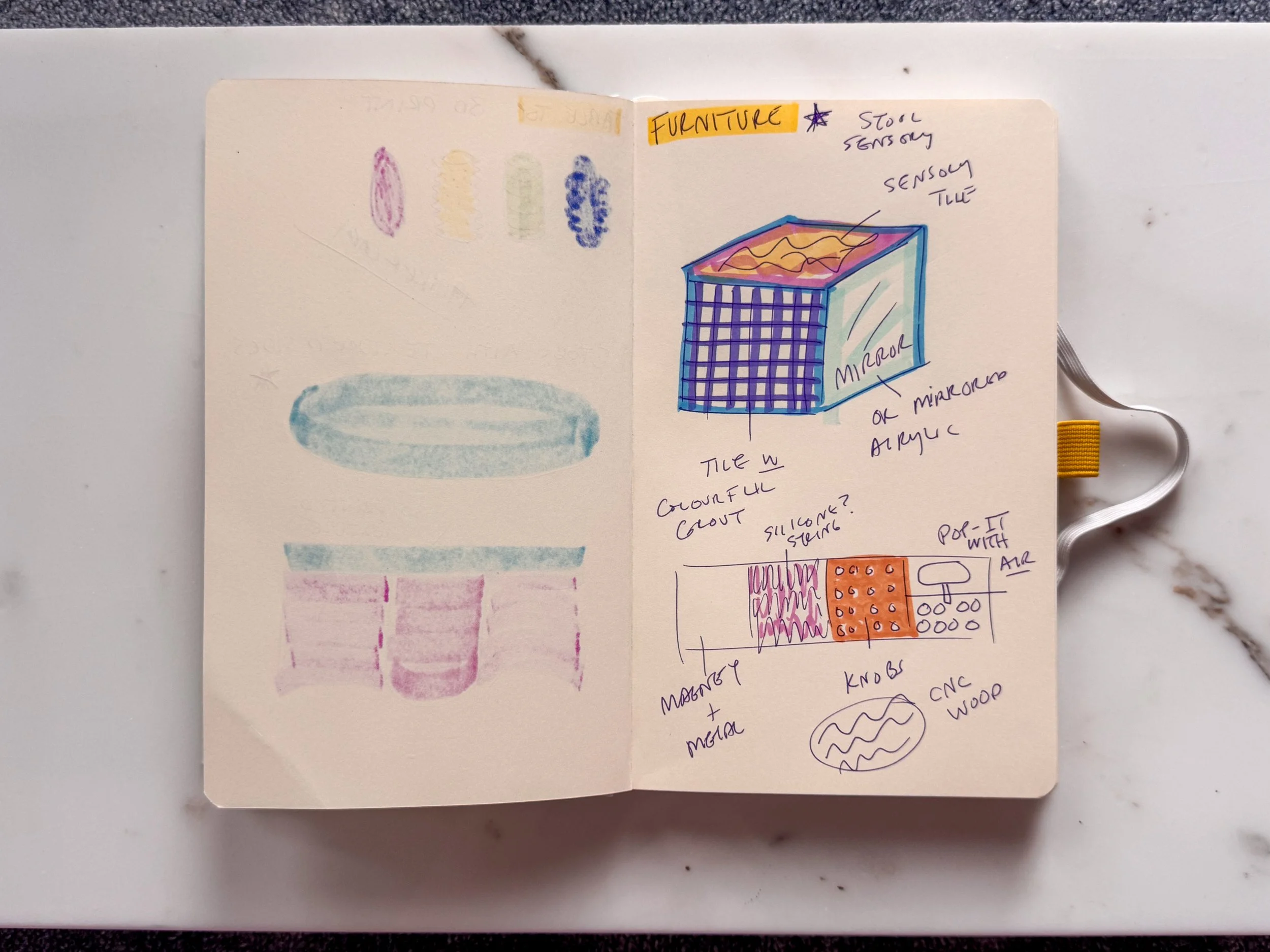
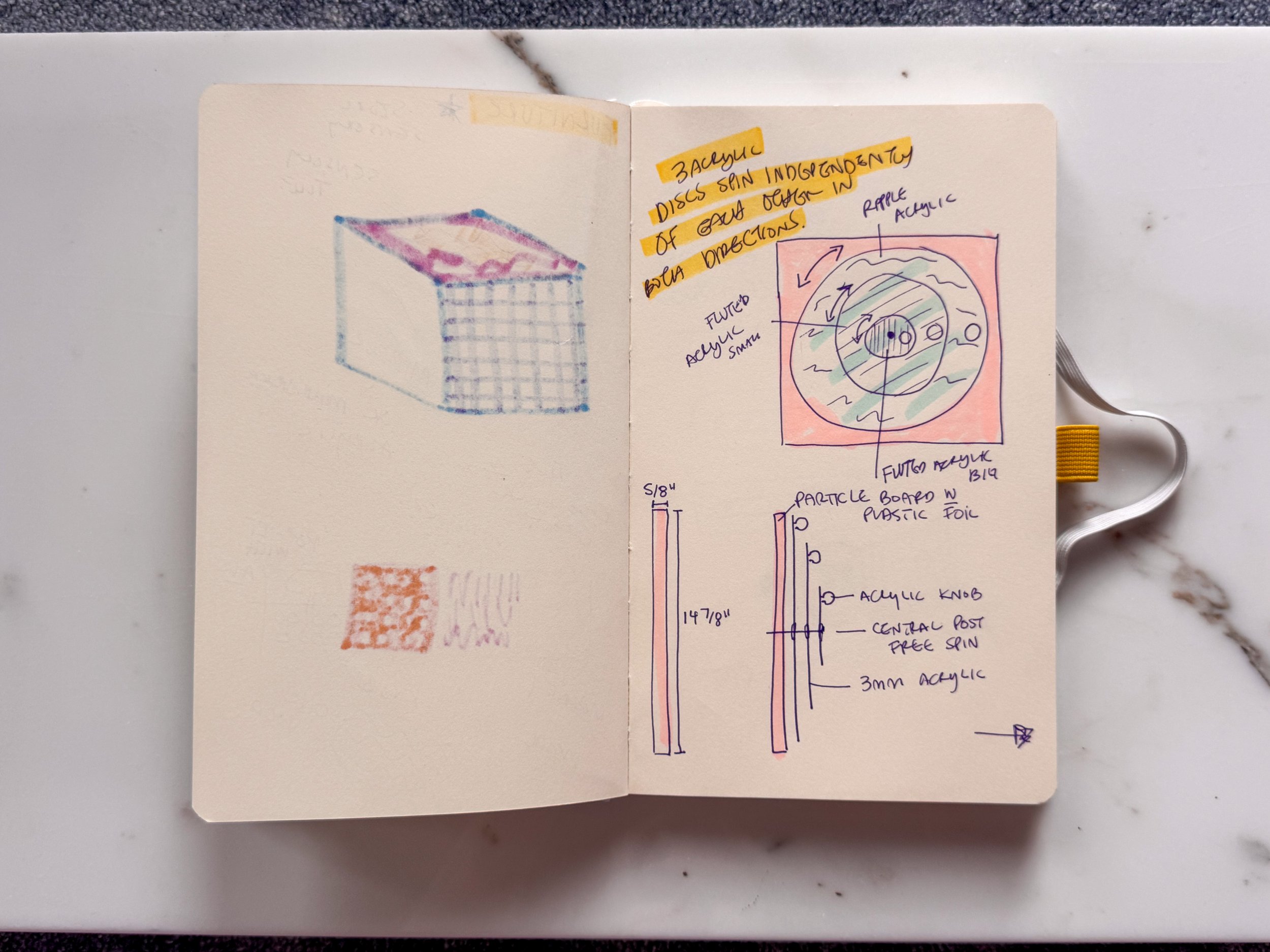
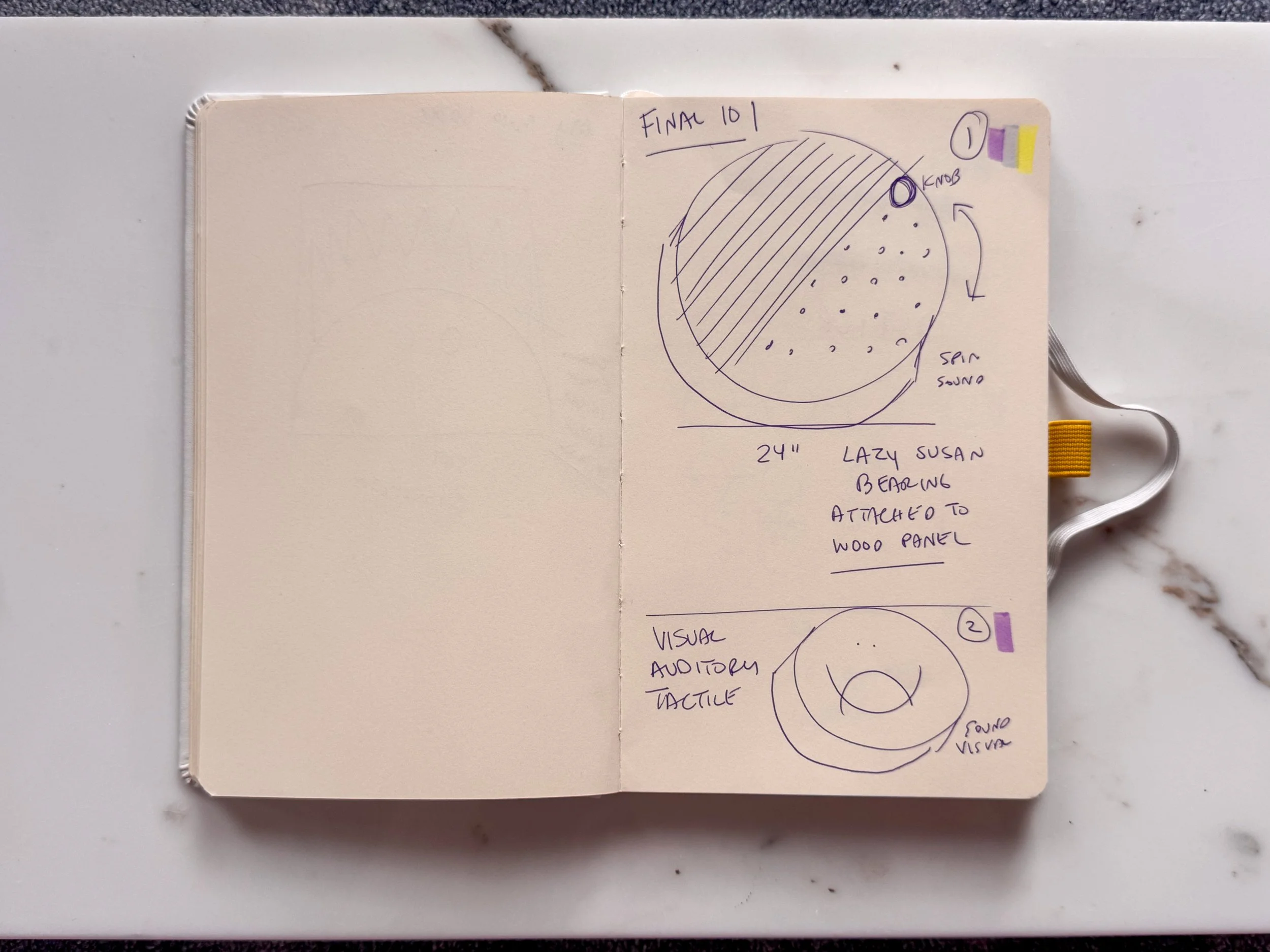
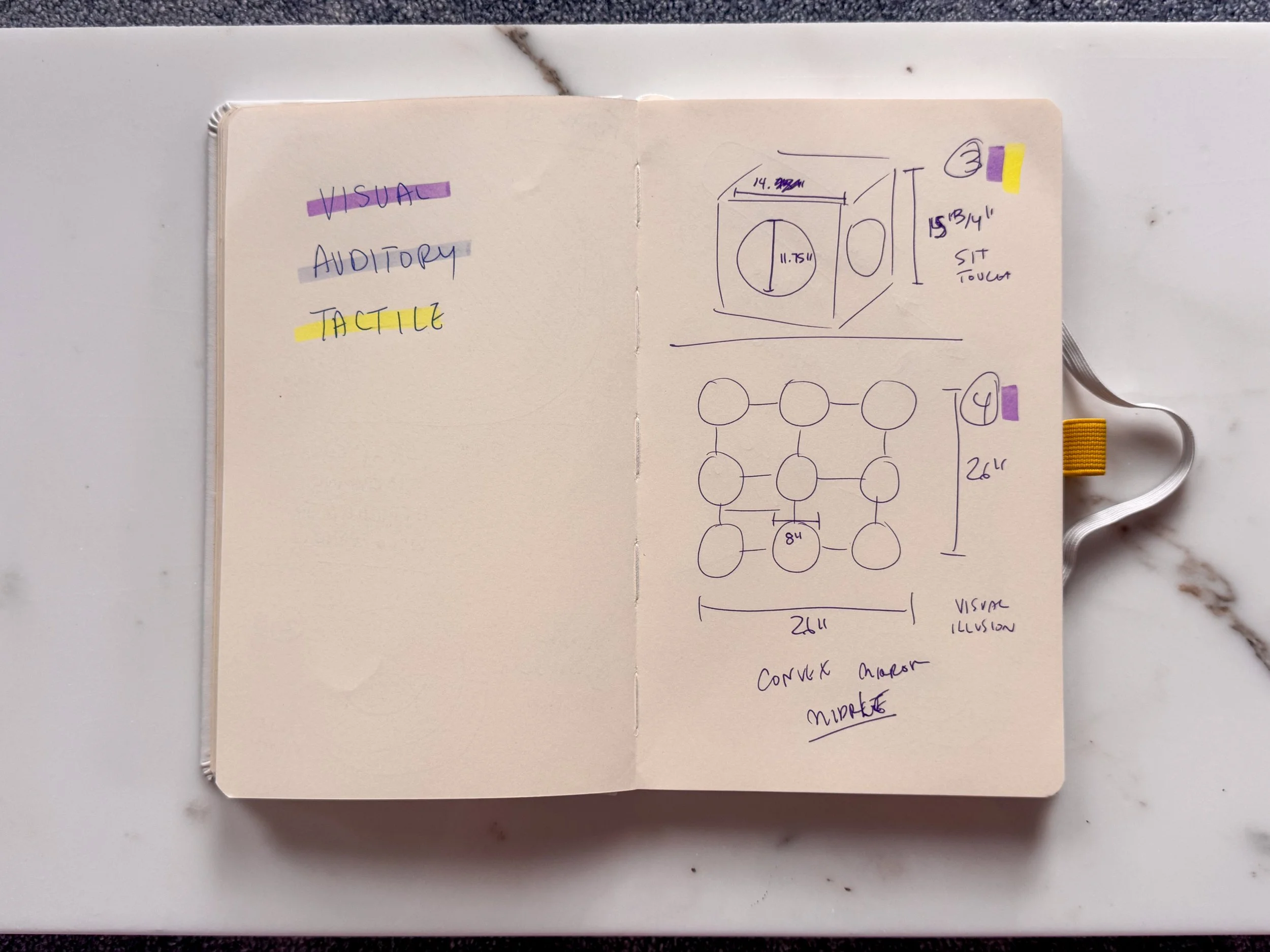
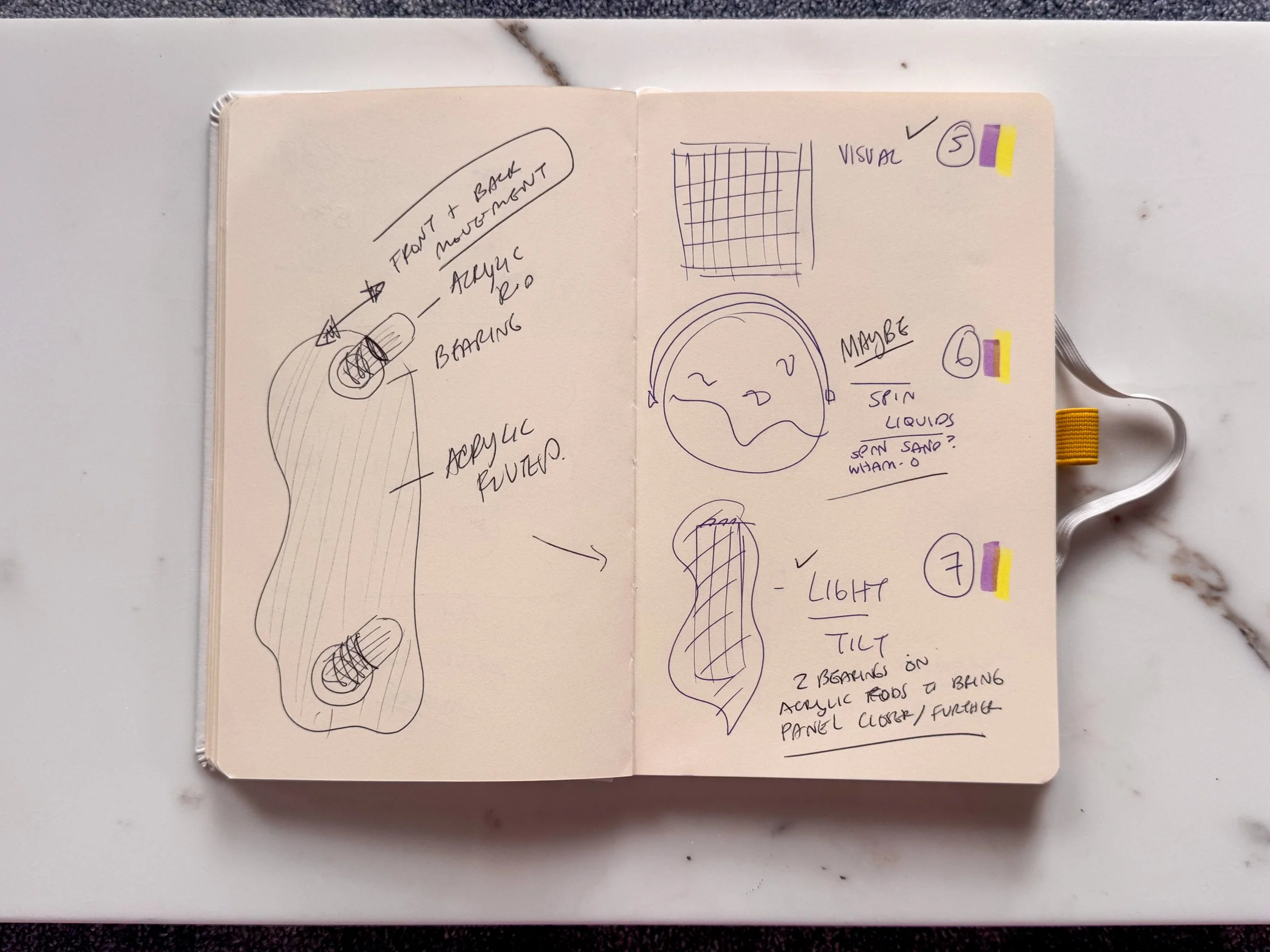
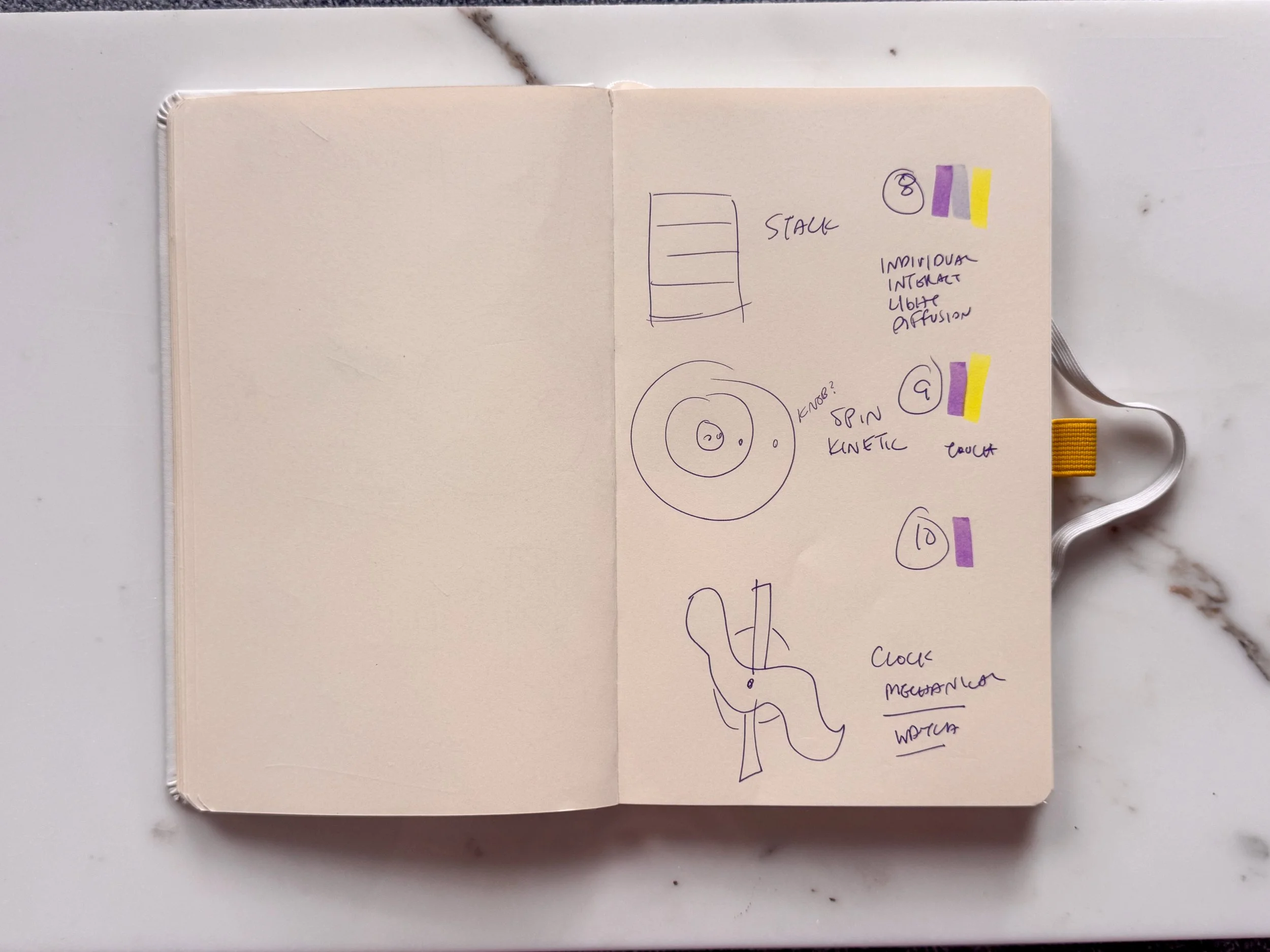
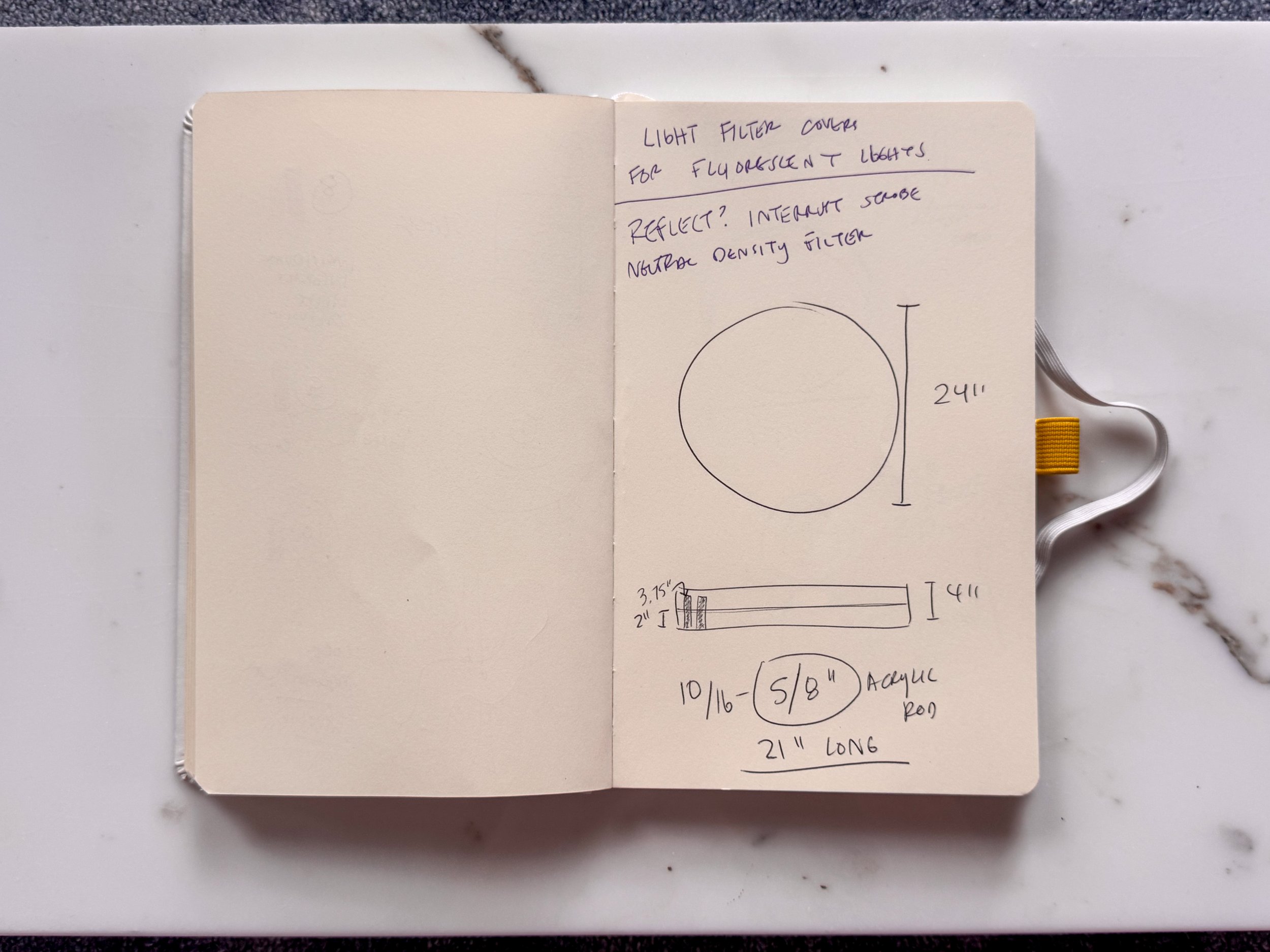
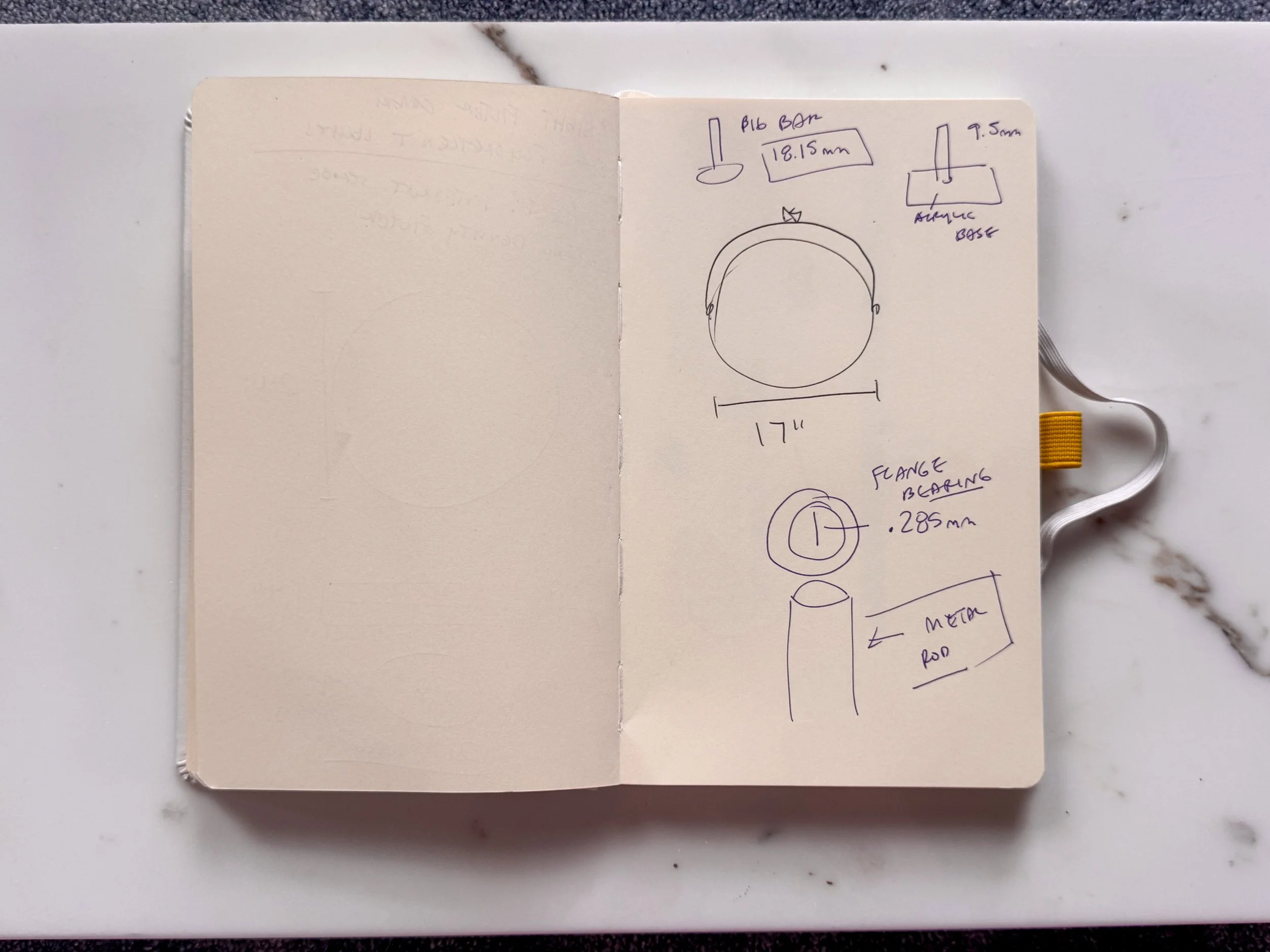
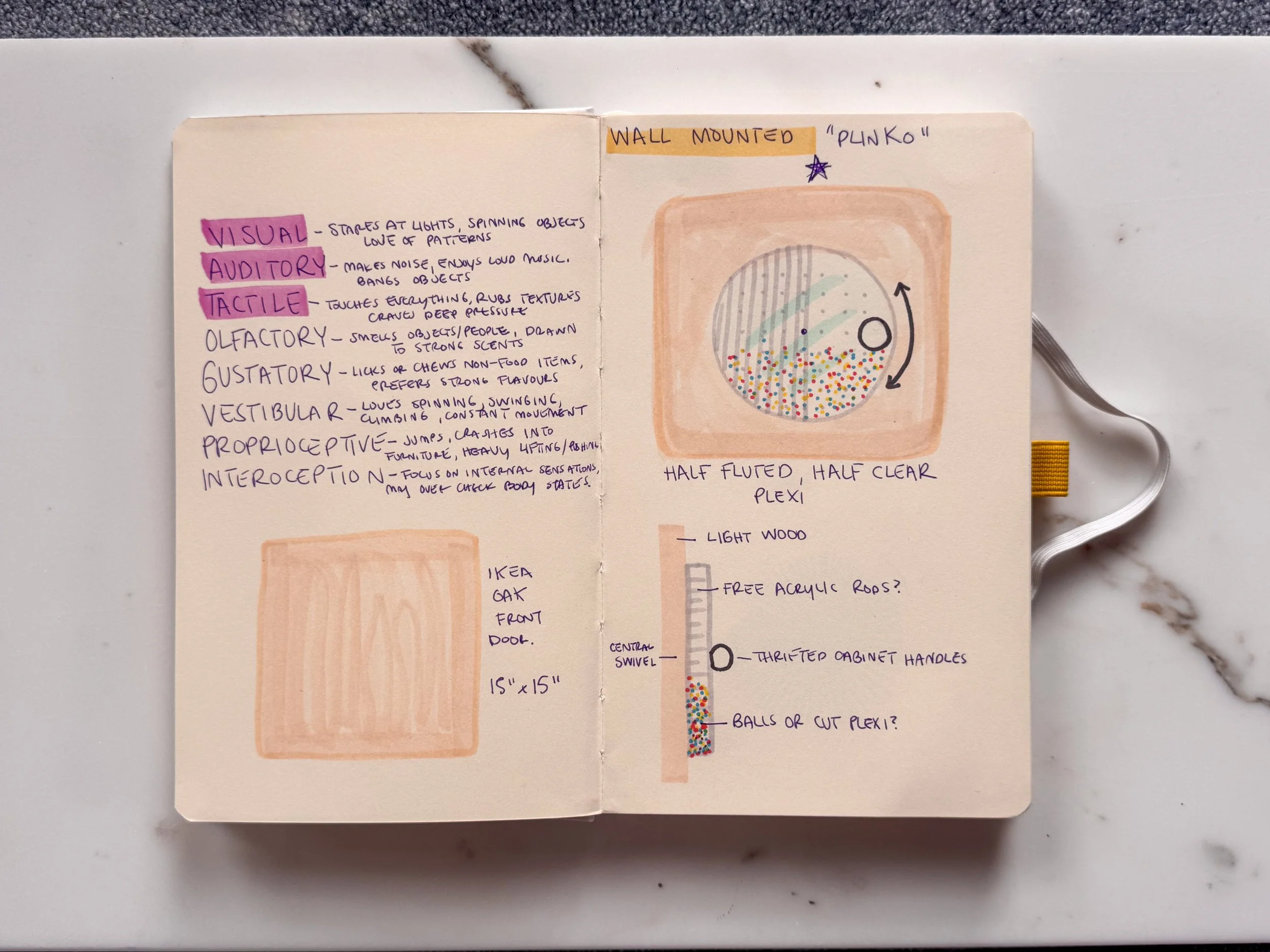
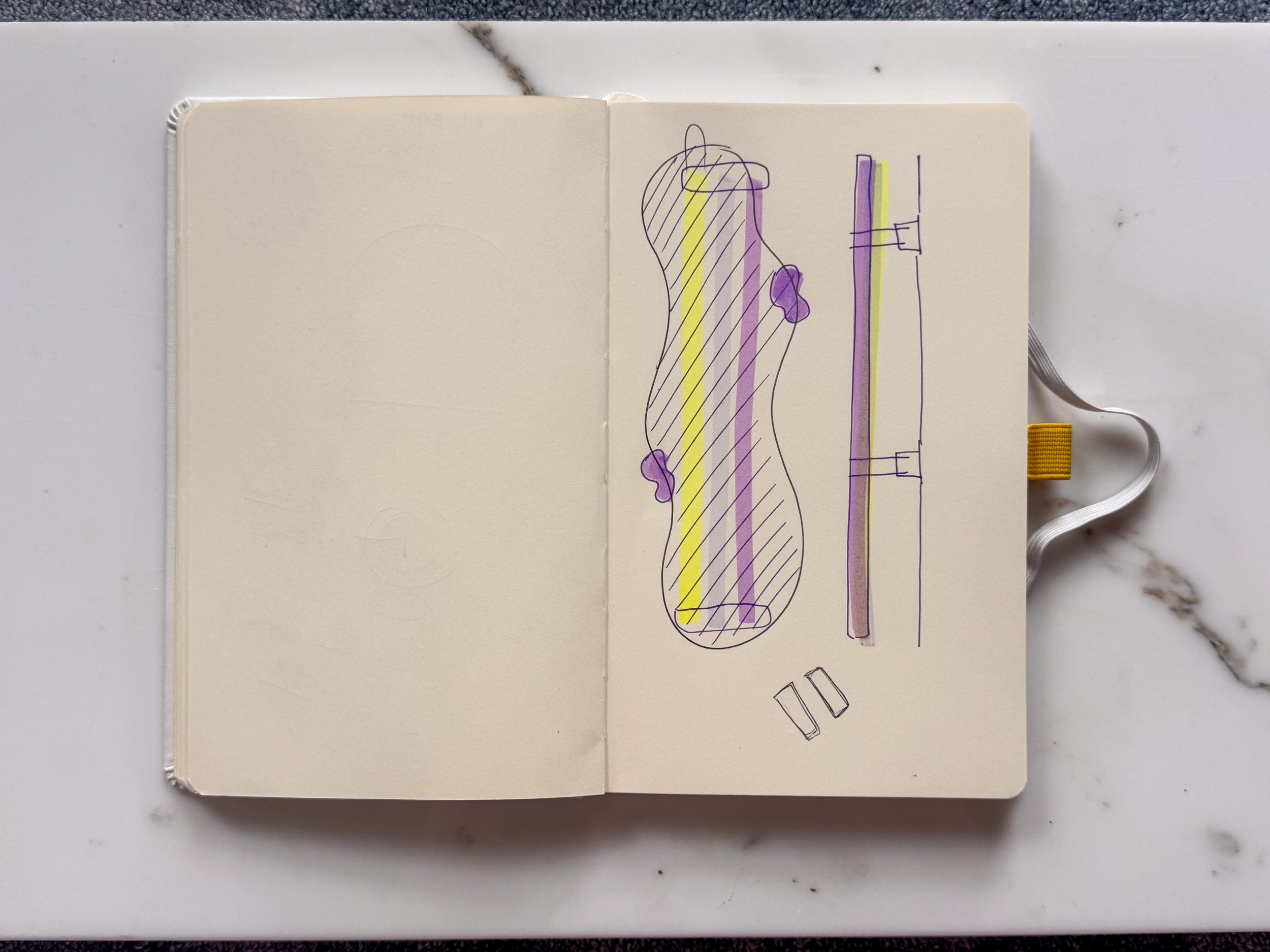
The research is not a single finished object. It consists of a growing body of sensory experiments and prototypes. The work so far has included extensive material exploration and sketching, as well as the development of several prototypes.
Sketchbook
The Hudson’s Bay Company Bankruptcy
Repurposing materials from the Hudson’s Bay Company Bankruptcy. The central downtown Montreal location turned out to be an incredible source of materials just waiting to be reimagined into new interactive objects.

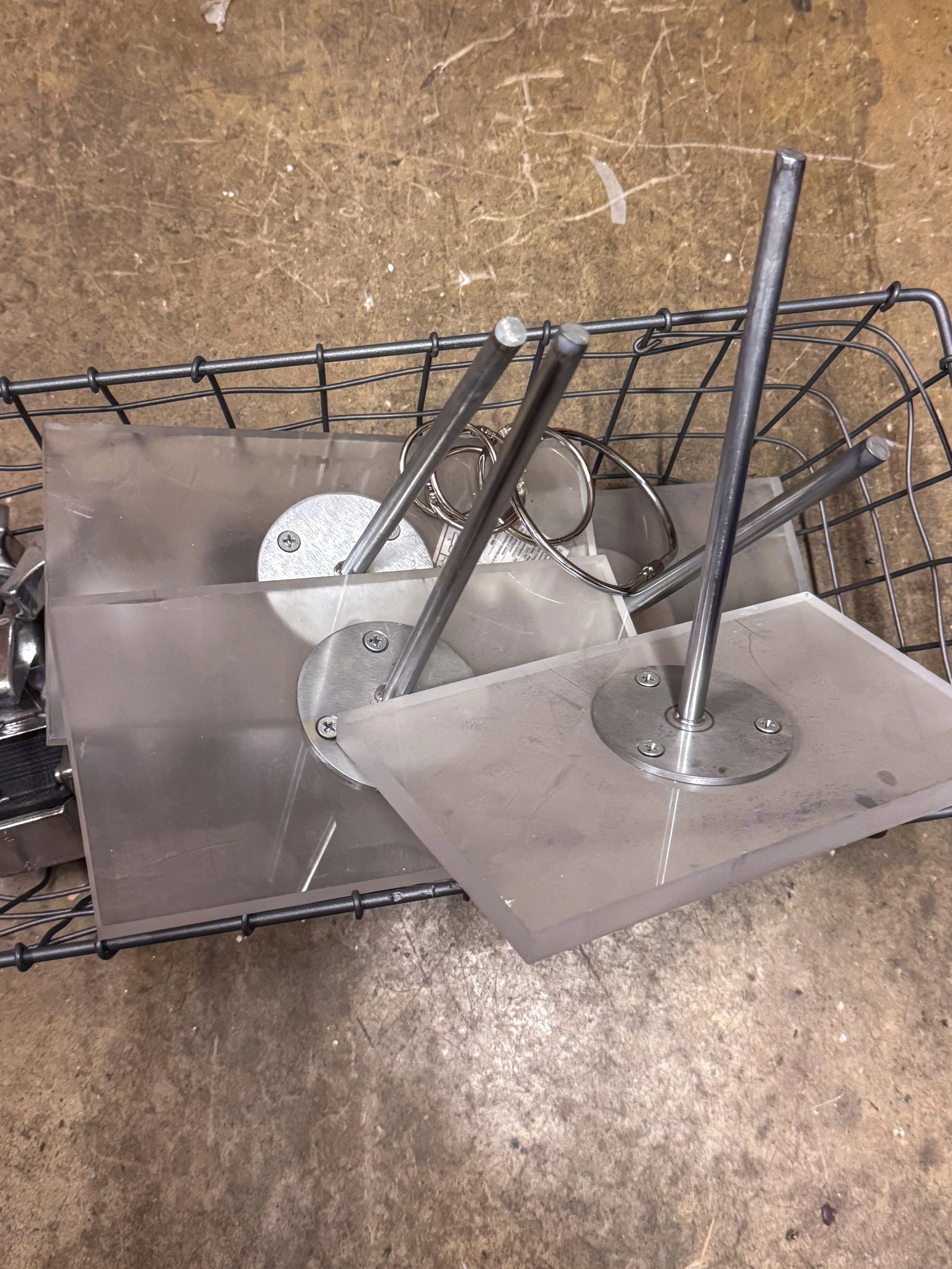
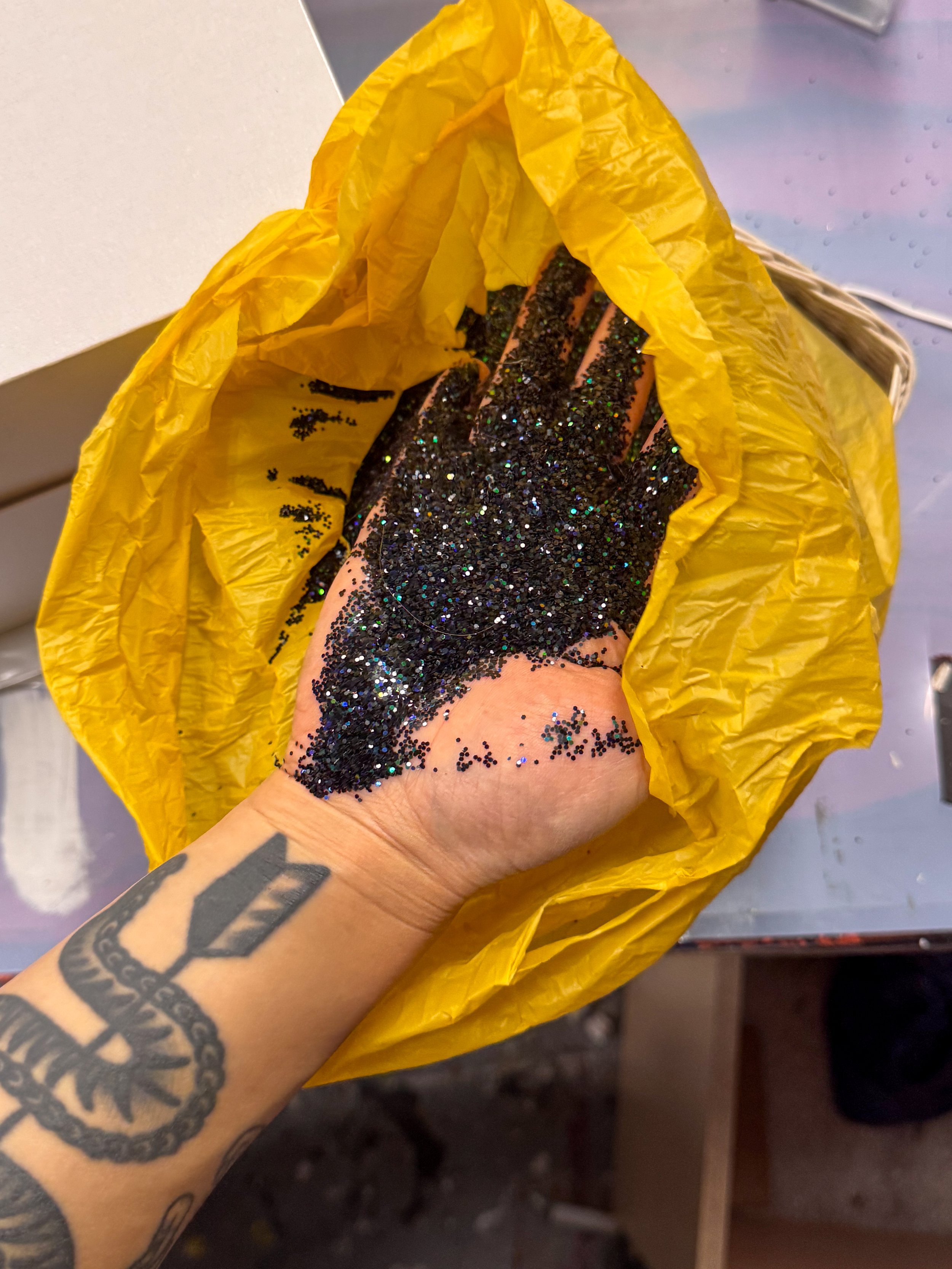
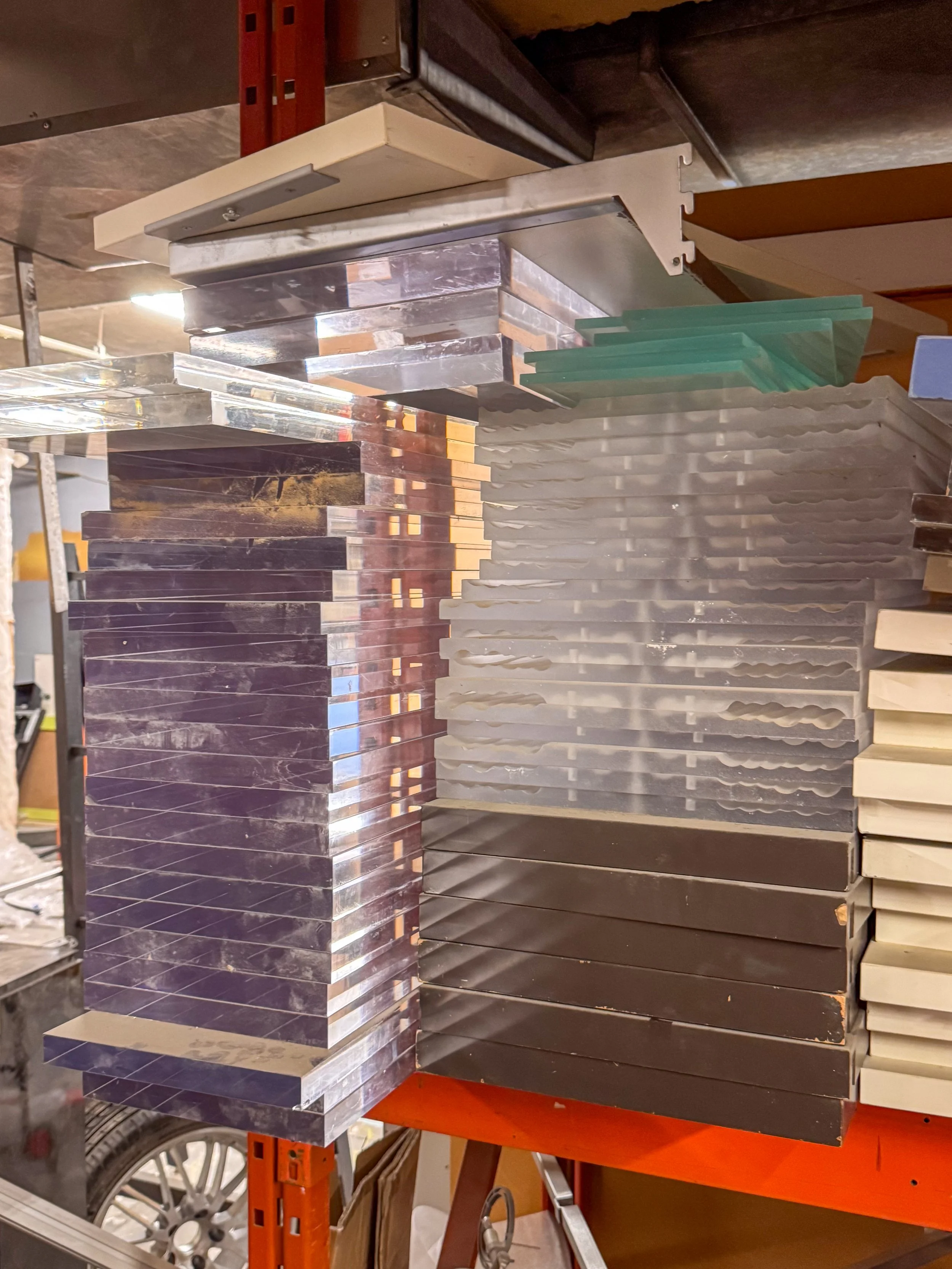
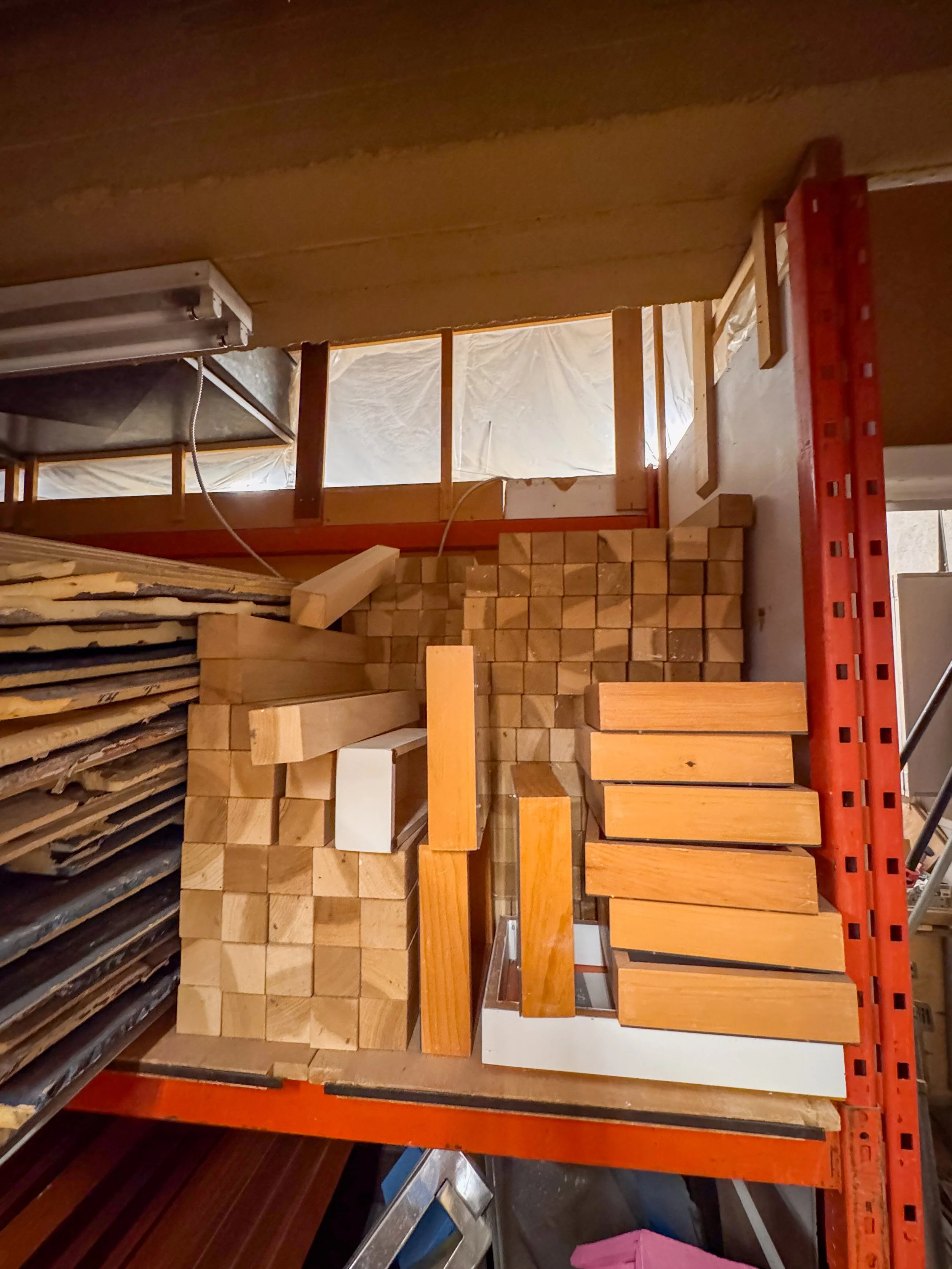

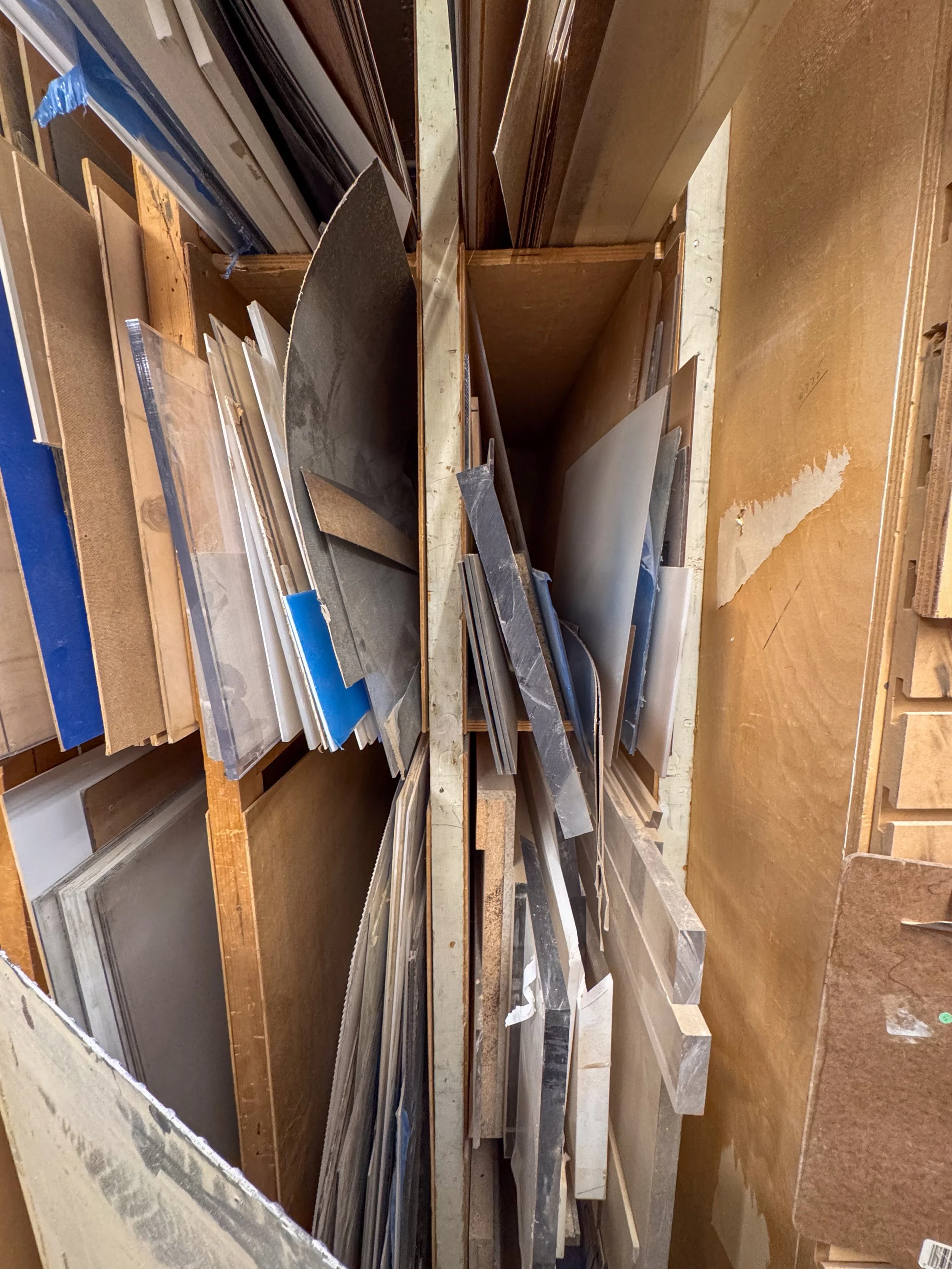
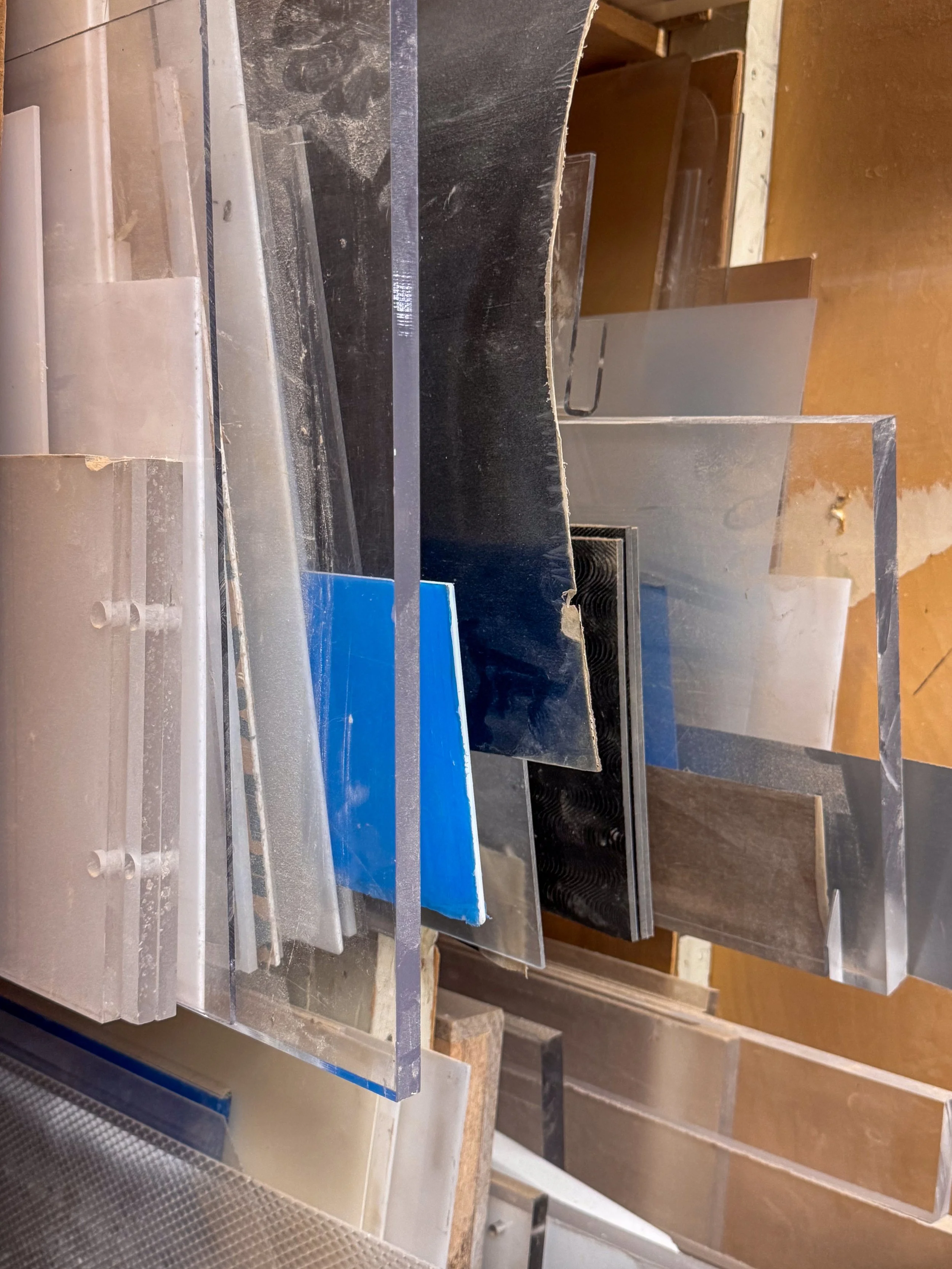
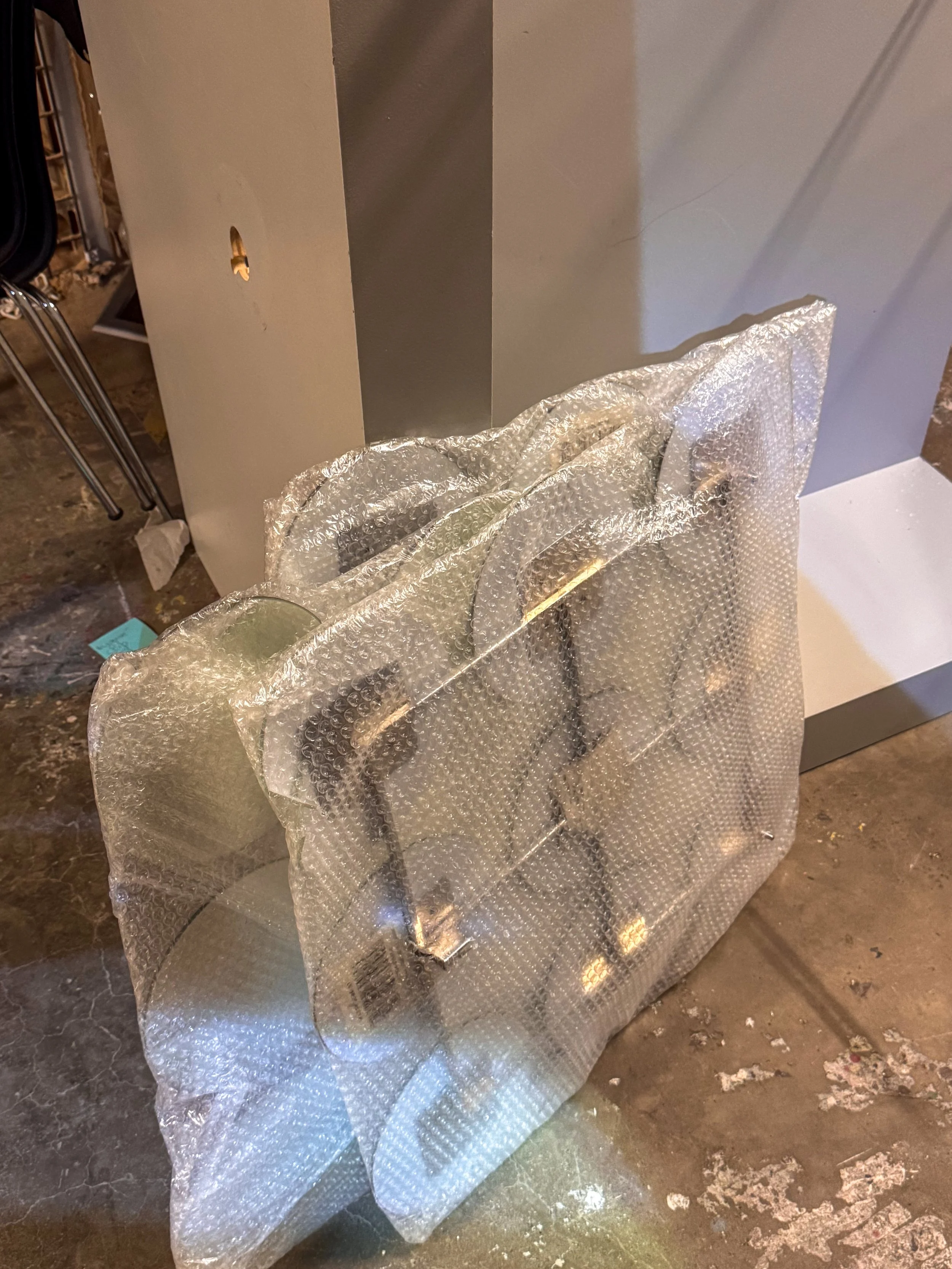
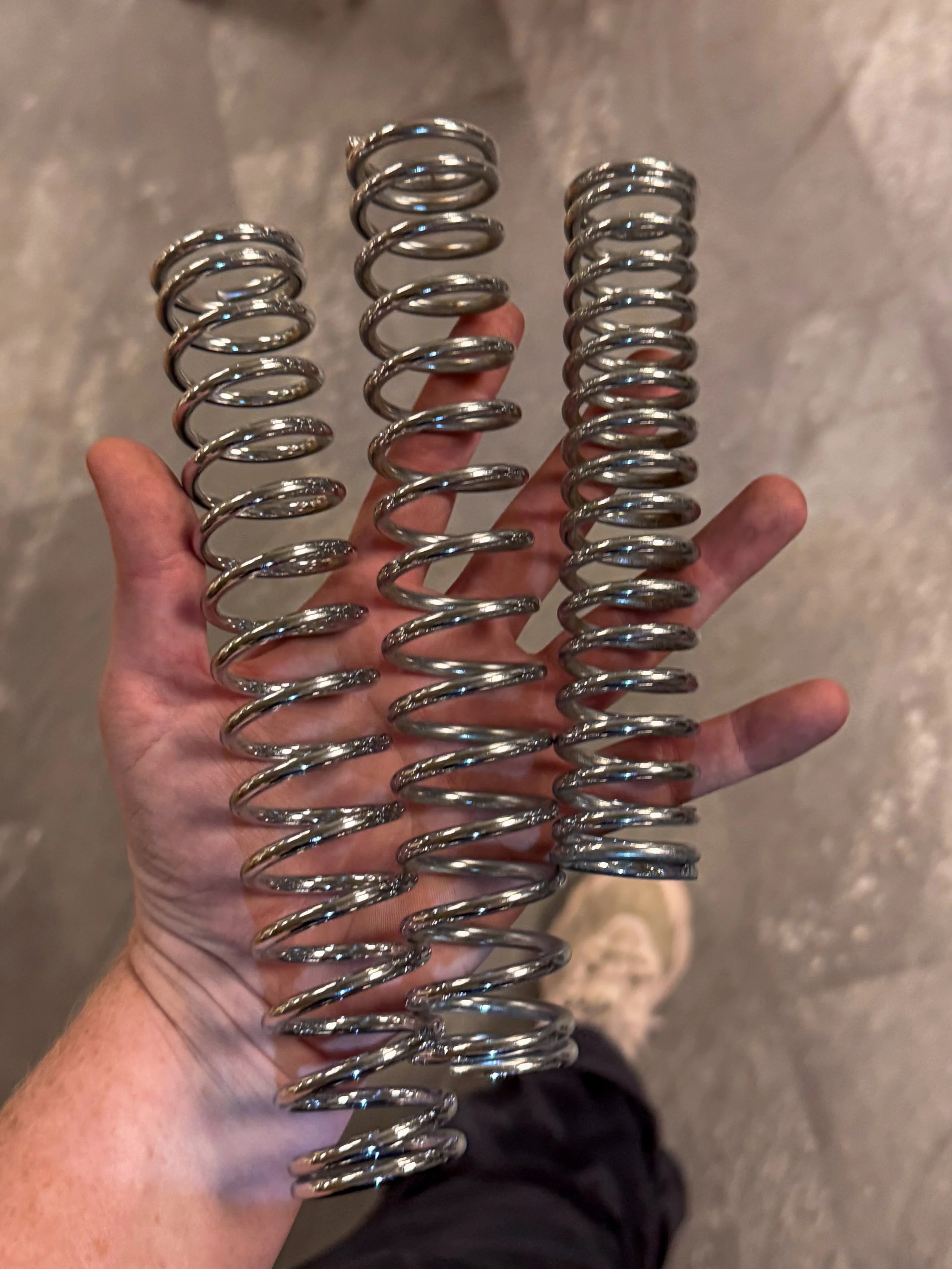
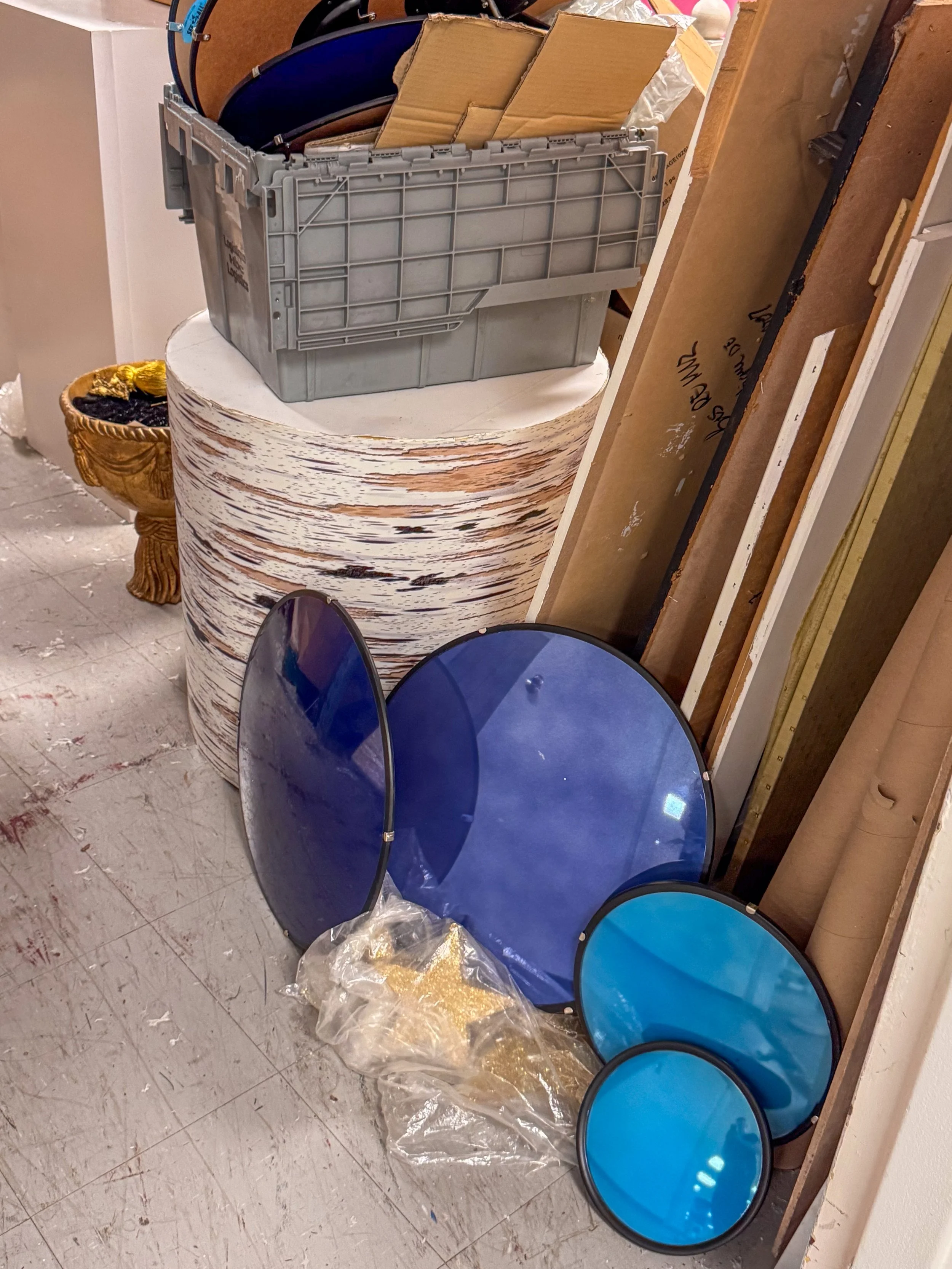
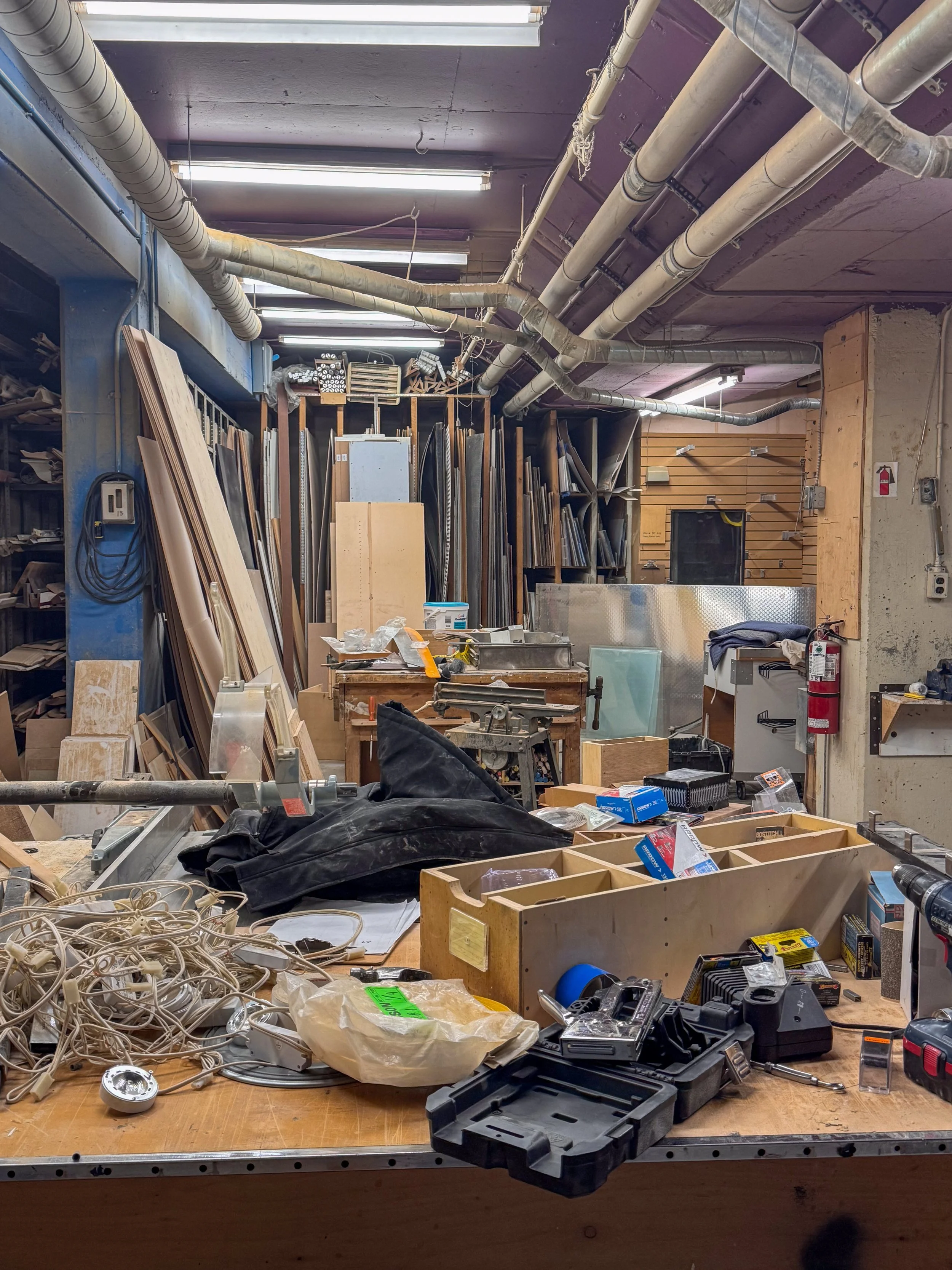
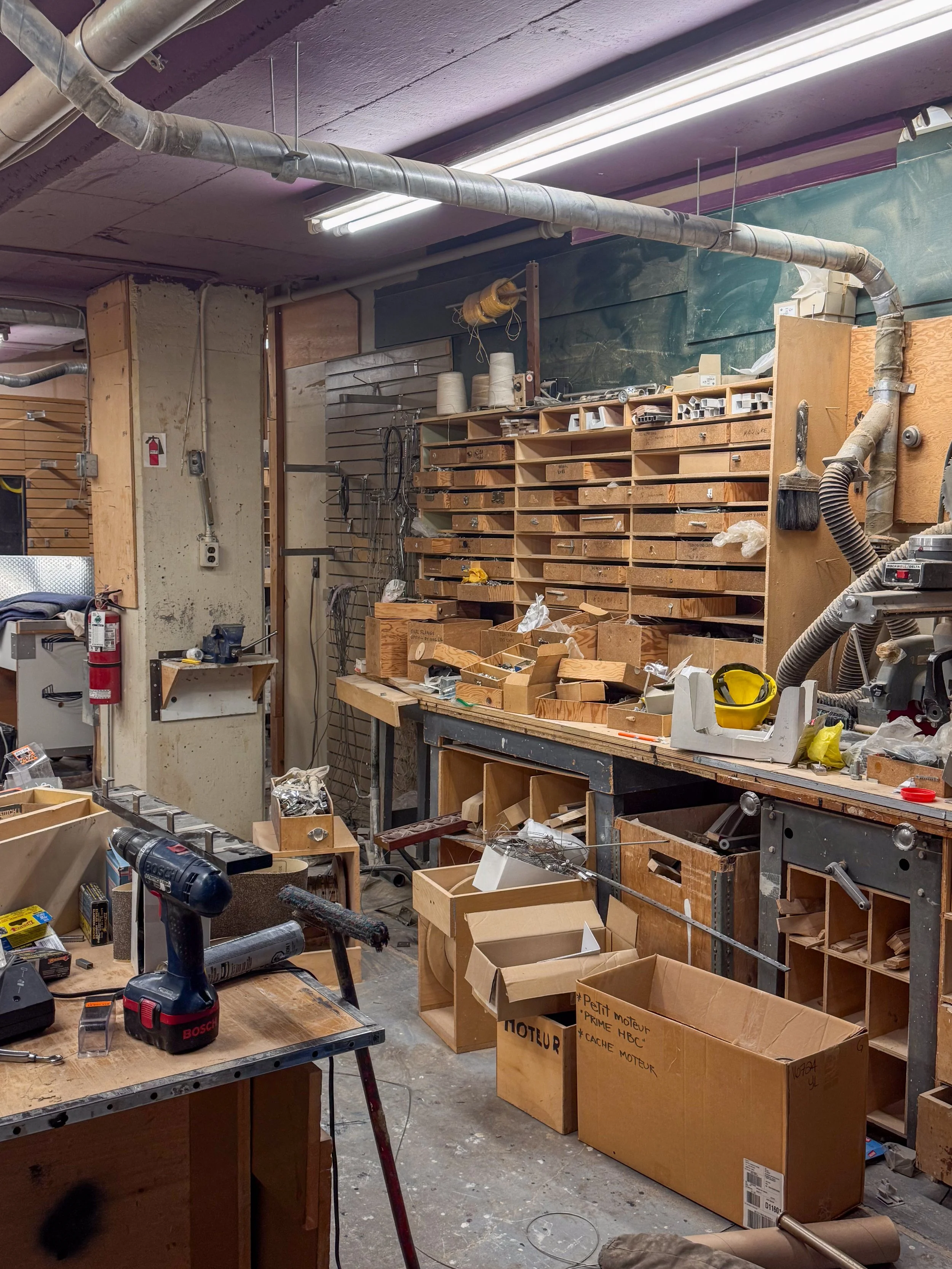
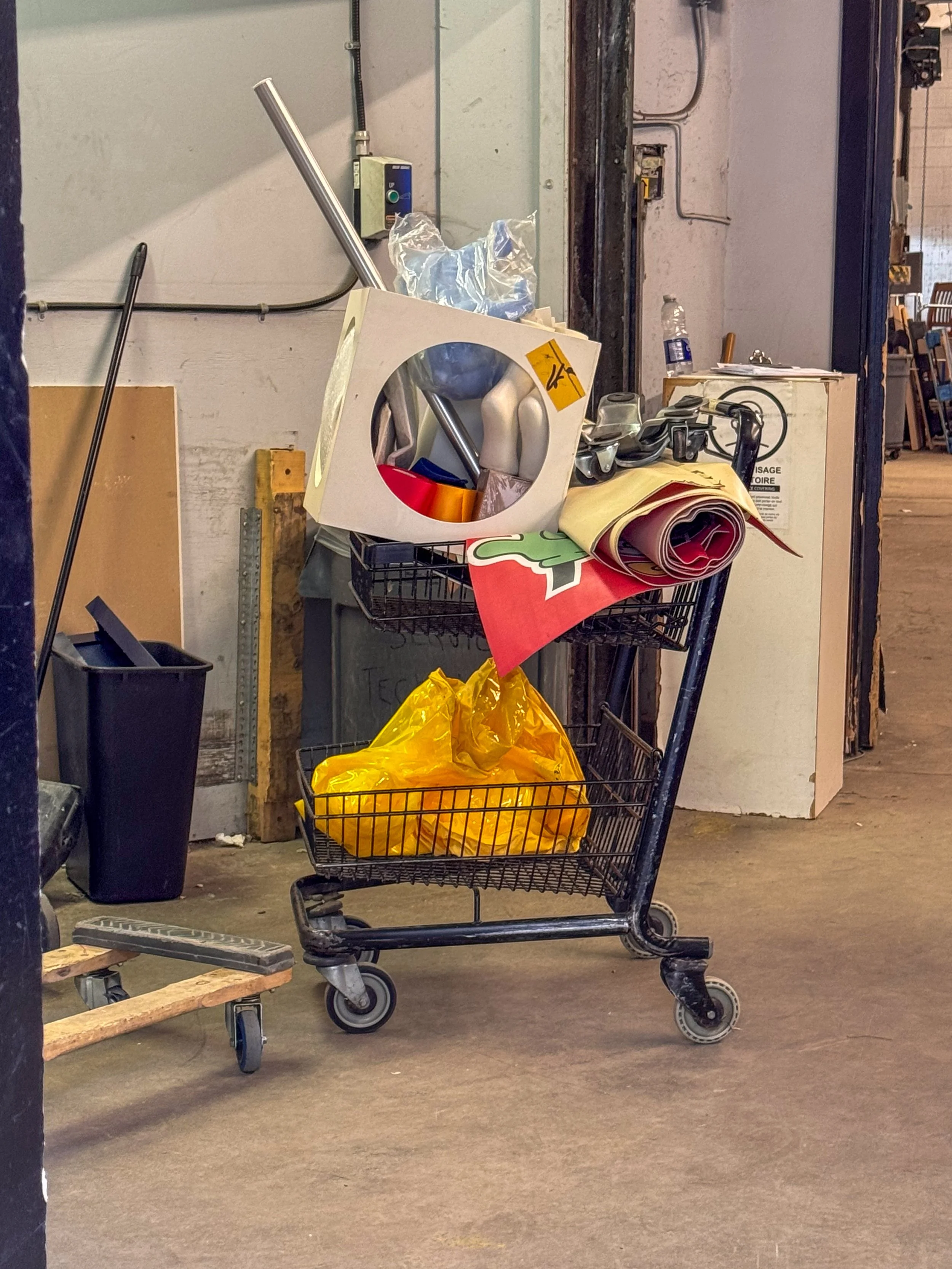
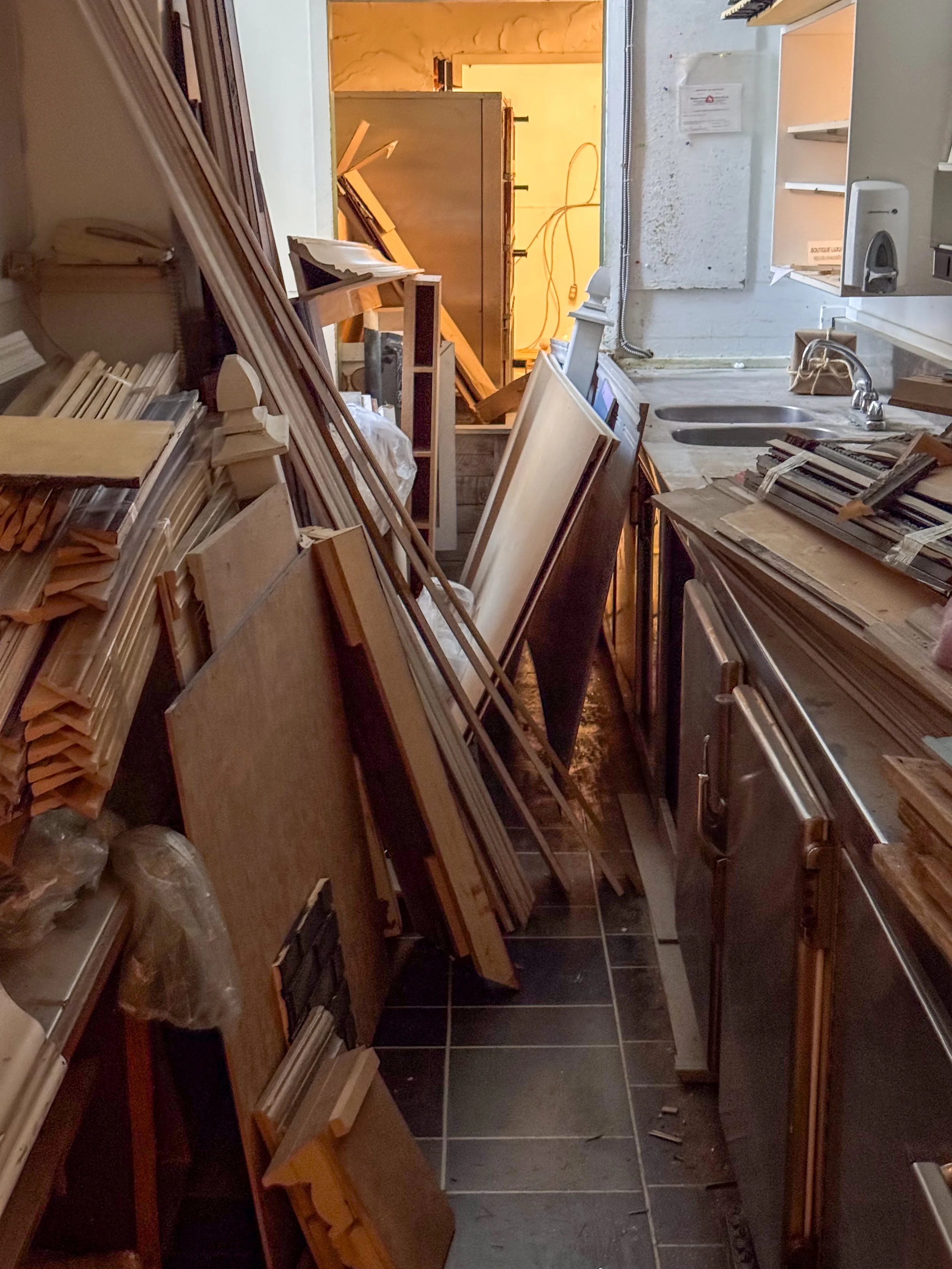
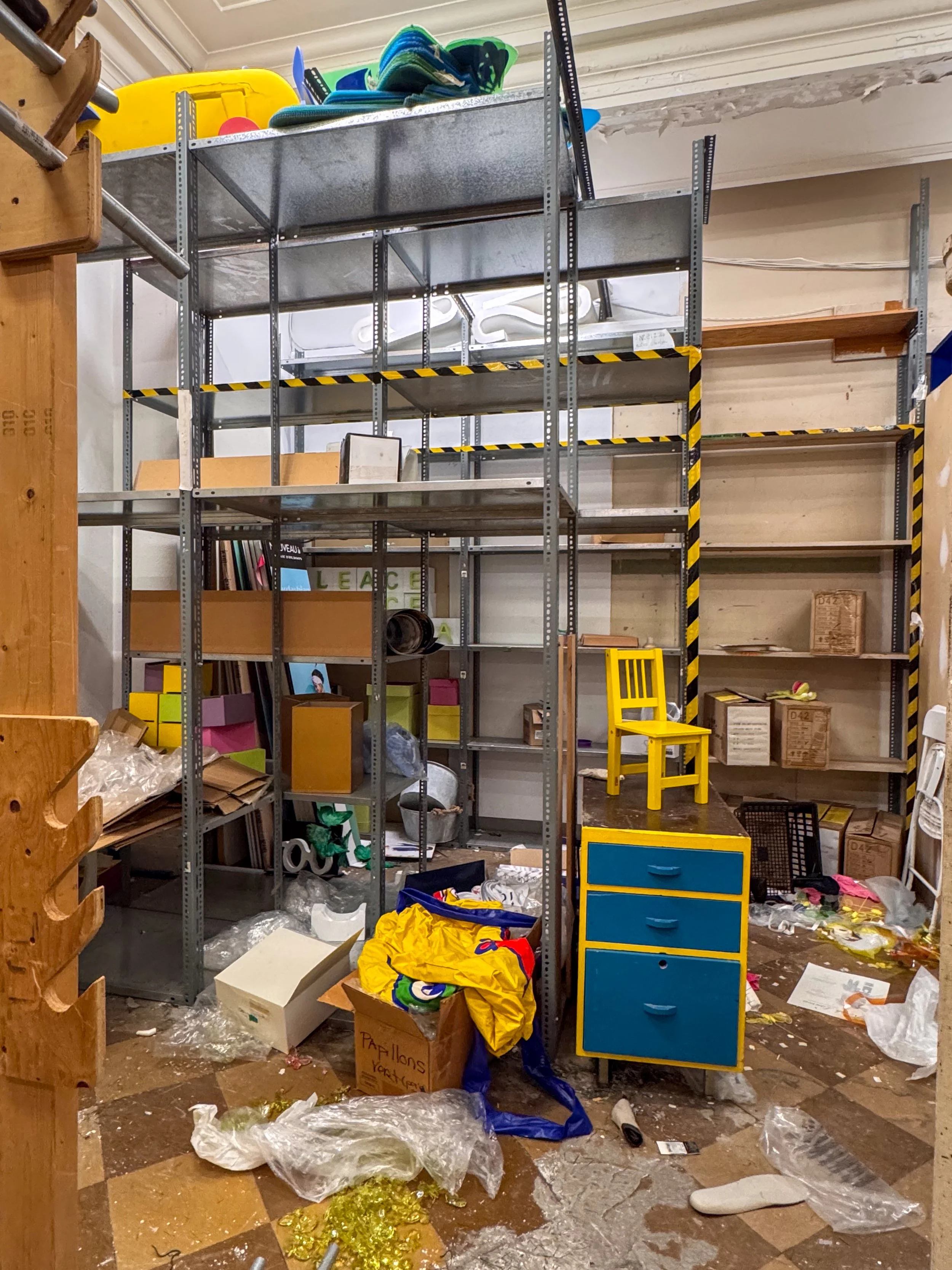
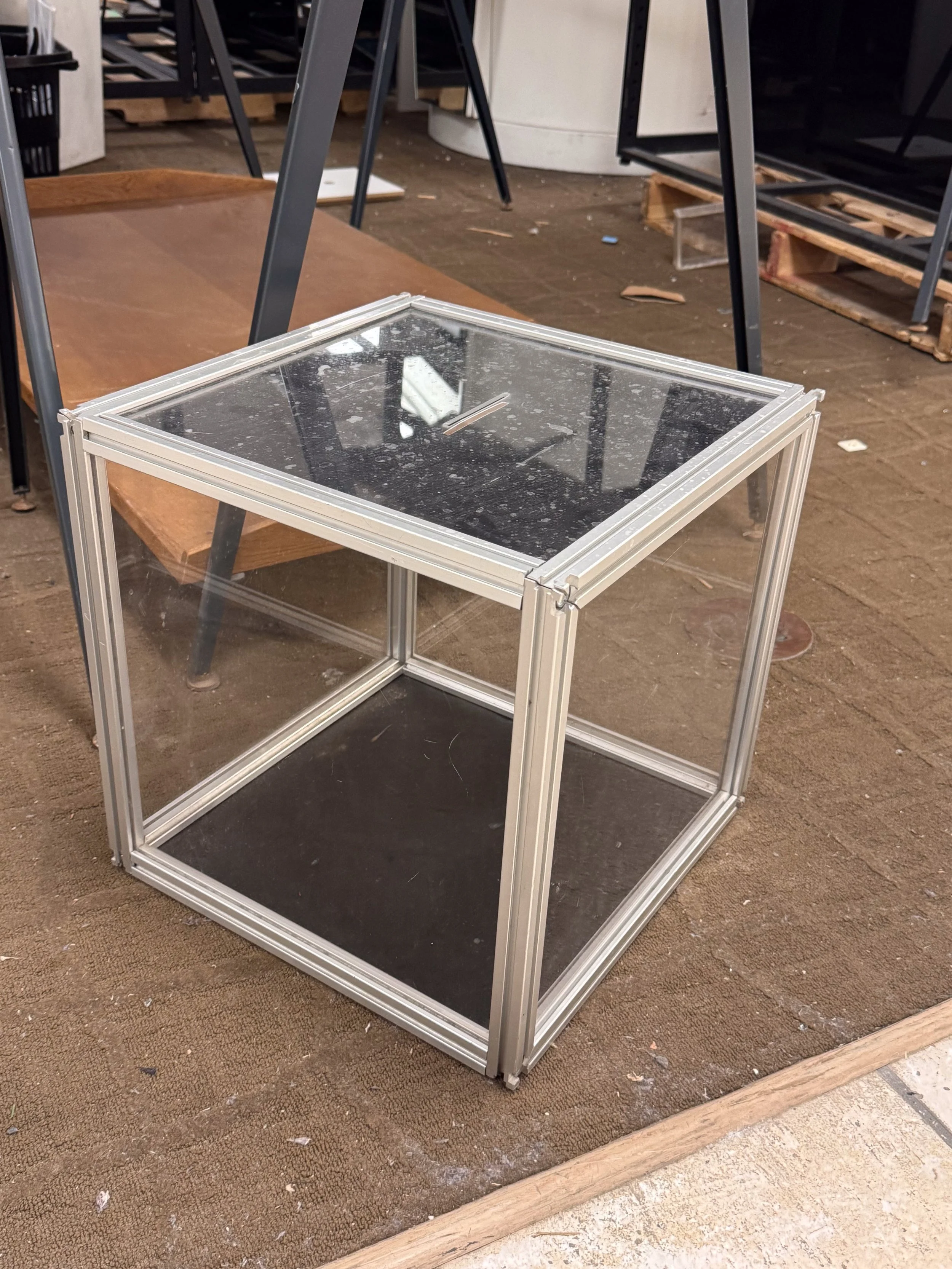
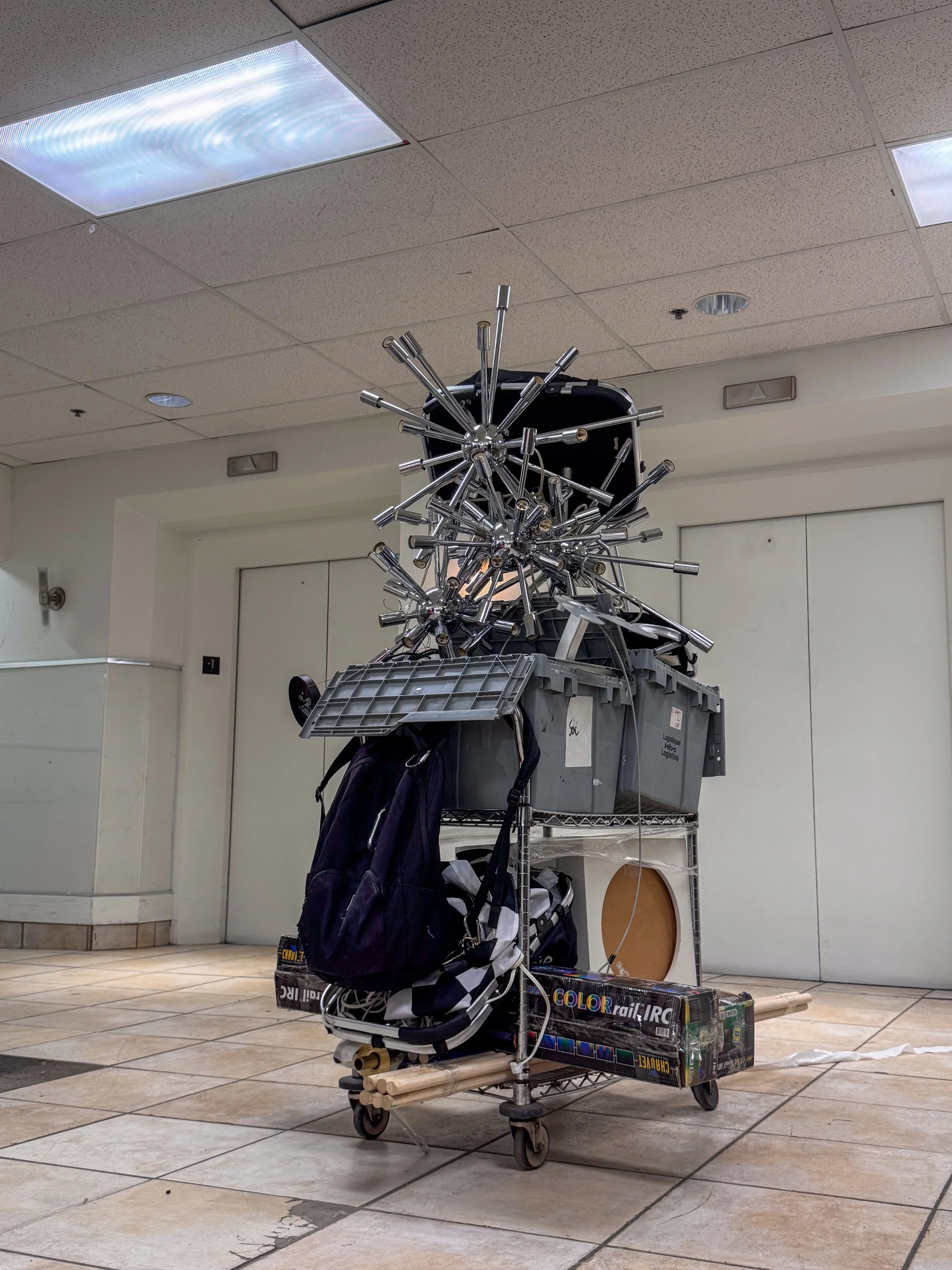
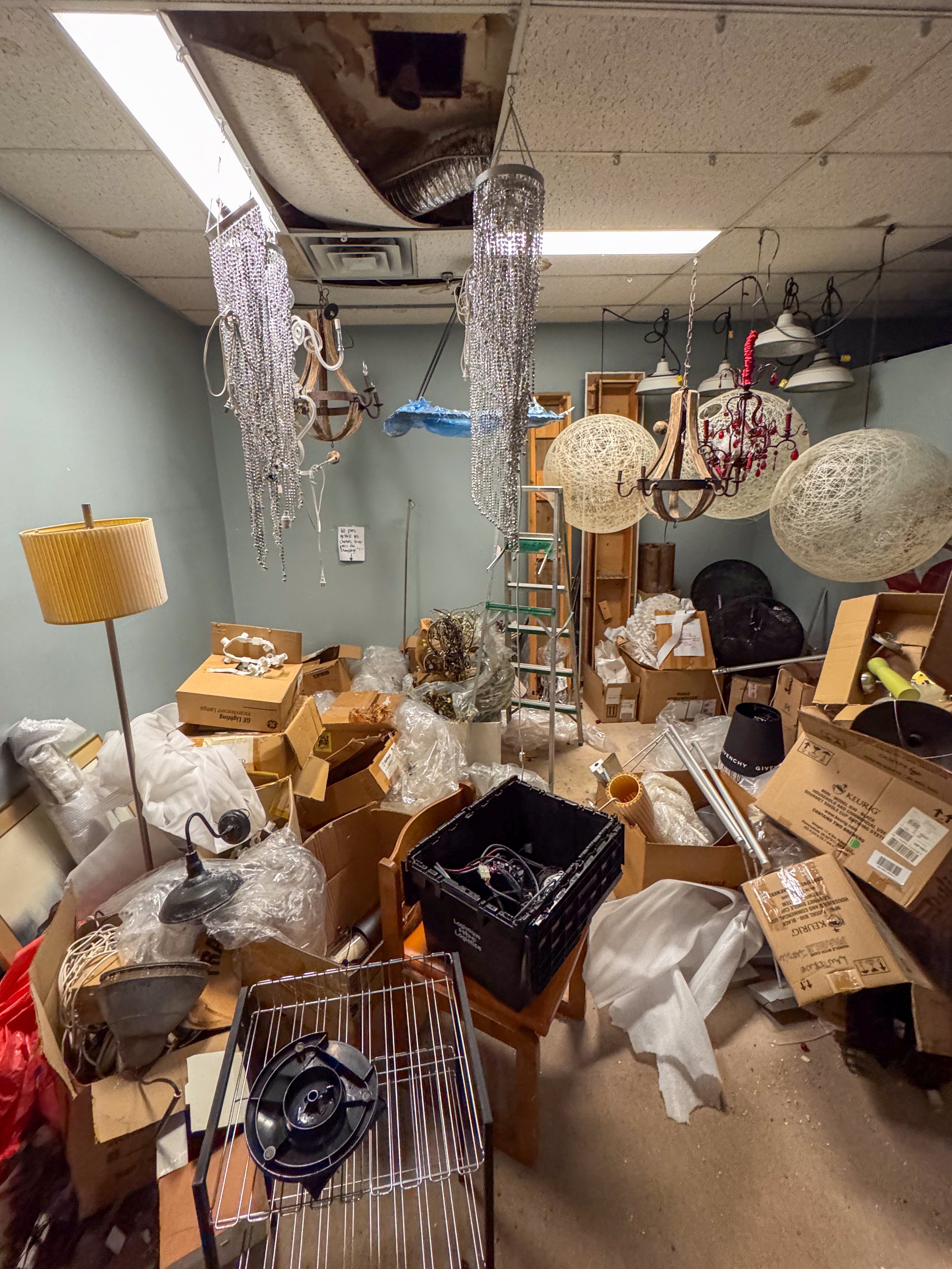
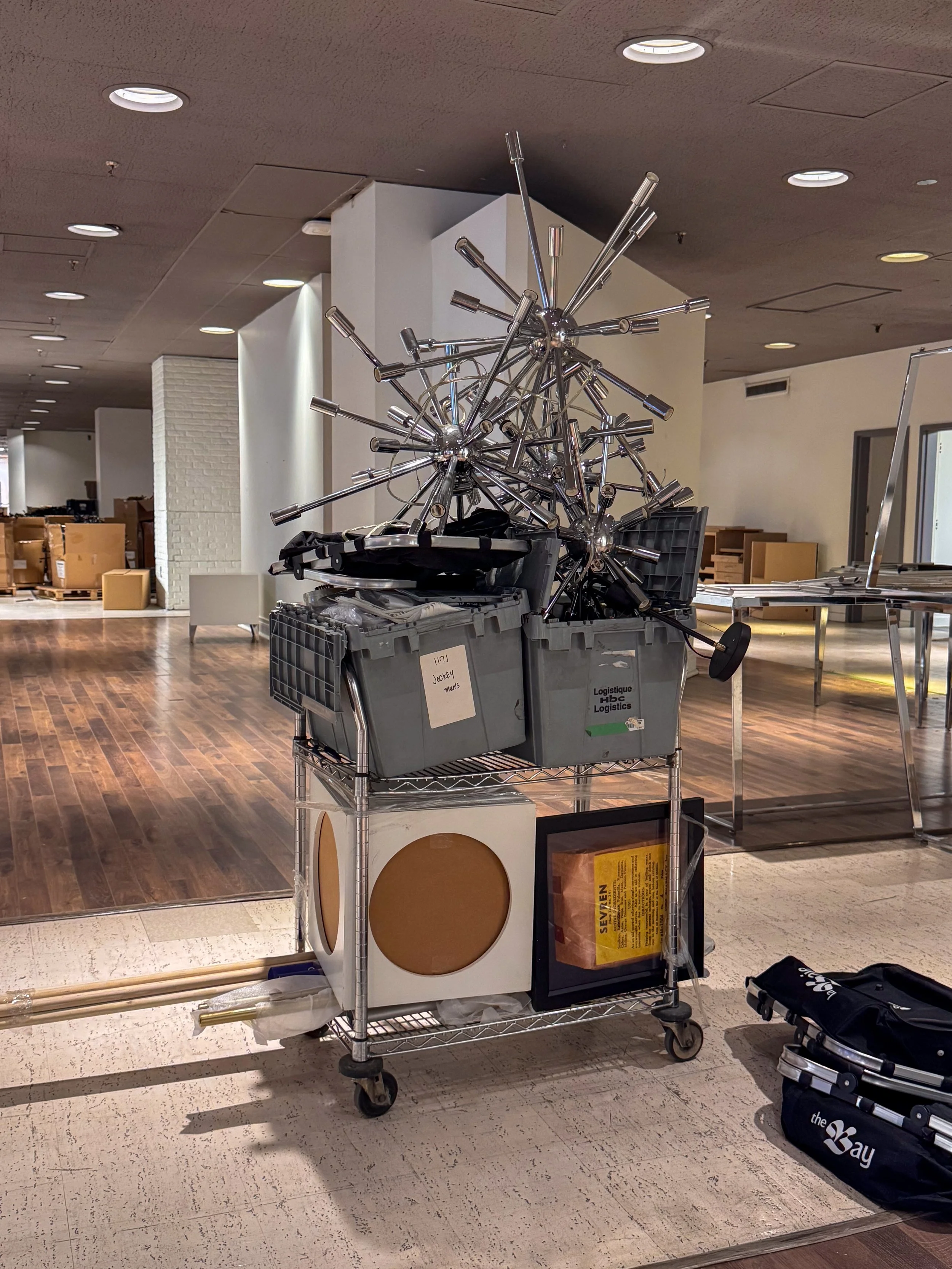
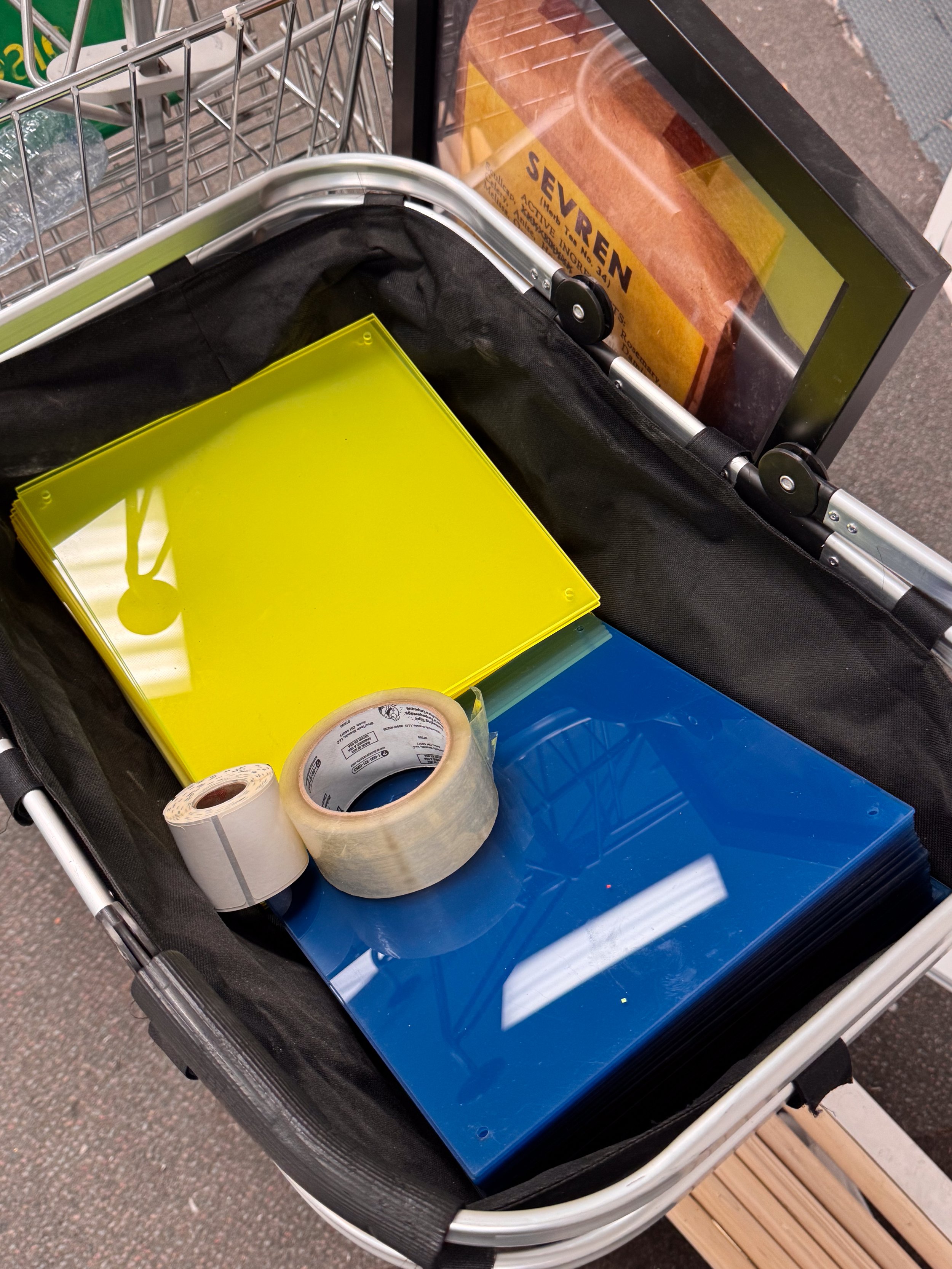

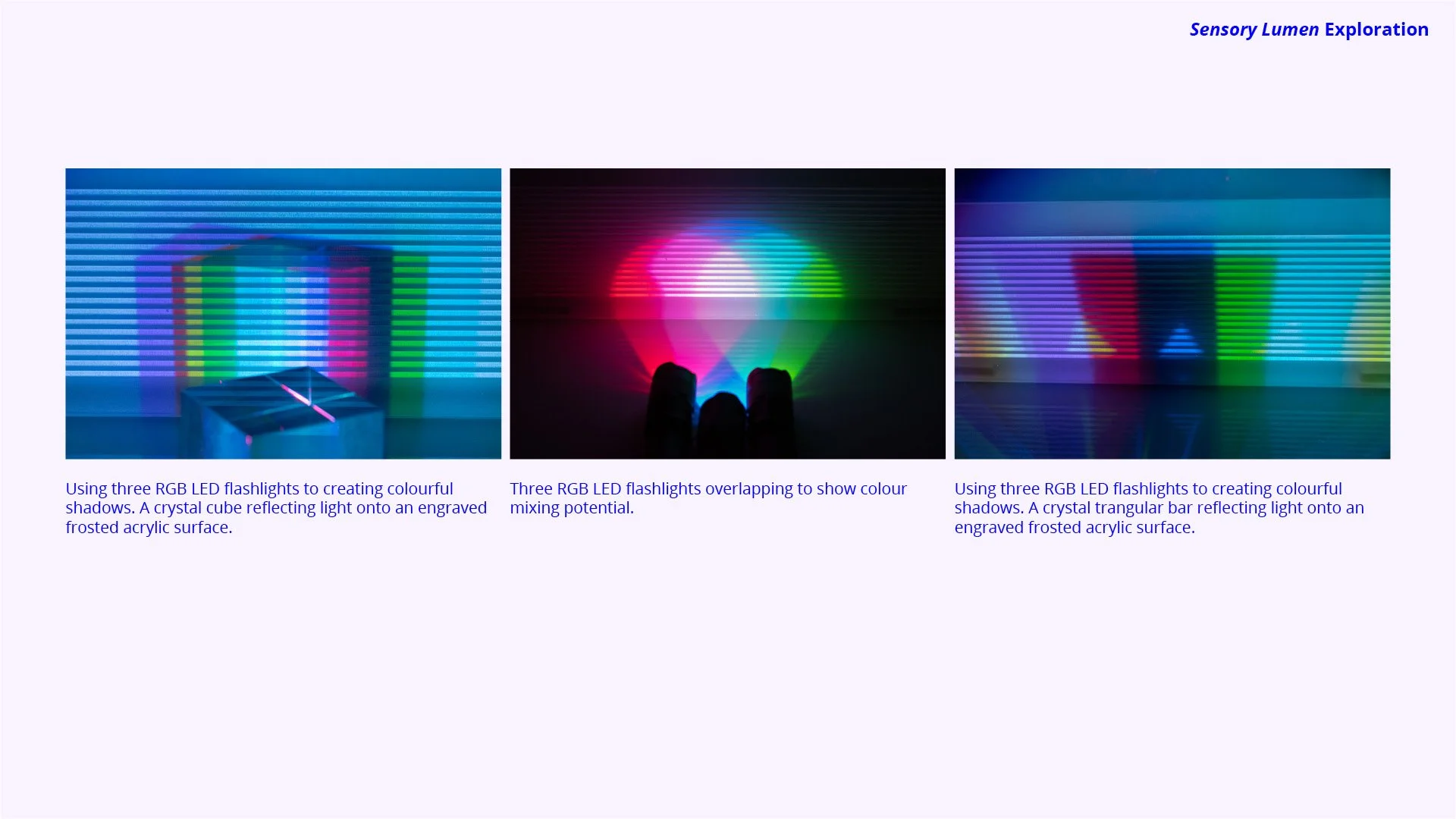
Early material research that will inform final prototypes